Peru and Bolivia: Machu Picchu, Titicaca and Salar de Uyuni
Peru and Bolivia: Machu Picchu, Titicaca and Salar de Uyuni
- Round-trip flight included
- Accommodation throughout the tour
- Group leader
- Small group, maximum 16 participants
Fourteen days from the Pacific to the largest salt desert in the world: Lima, the Sacred Valley and Machu Picchu, Cusco, Lake Titicaca with its floating islands, then we cross into Bolivia — Isla del Sol, La Paz with its cable cars and Salar de Uyuni. Four domestic flights, the train to Machu Picchu and a night in a hotel built of salt.
Peru and Bolivia are two countries that flow into each other: the same mountains, the same giant lake on the border, the same Inca history. We do them in one direction, from the ocean upwards, so that altitude acclimatization comes naturally.
We start in Lima, with the colonial center and the Miraflores boardwalk, and climb to the Sacred Valley: Pisac market, Maras salt terraces, Ollantaytambo fortress. From there, the train through the Urubamba River gorge to the foot of Machu Picchu, which we see early in the morning, before the crowds. Two days in Cusco, the Inca capital, with walls that have withstood earthquakes for five hundred years.
We descend towards Titicaca, the highest navigable lake in the world, to the Uros community's floating reed islands and to Taquile, then cross the border into Bolivia: Isla del Sol, the place where, in mythology, the sun was born, and La Paz, the city that climbs the hills with cable cars instead of a subway.
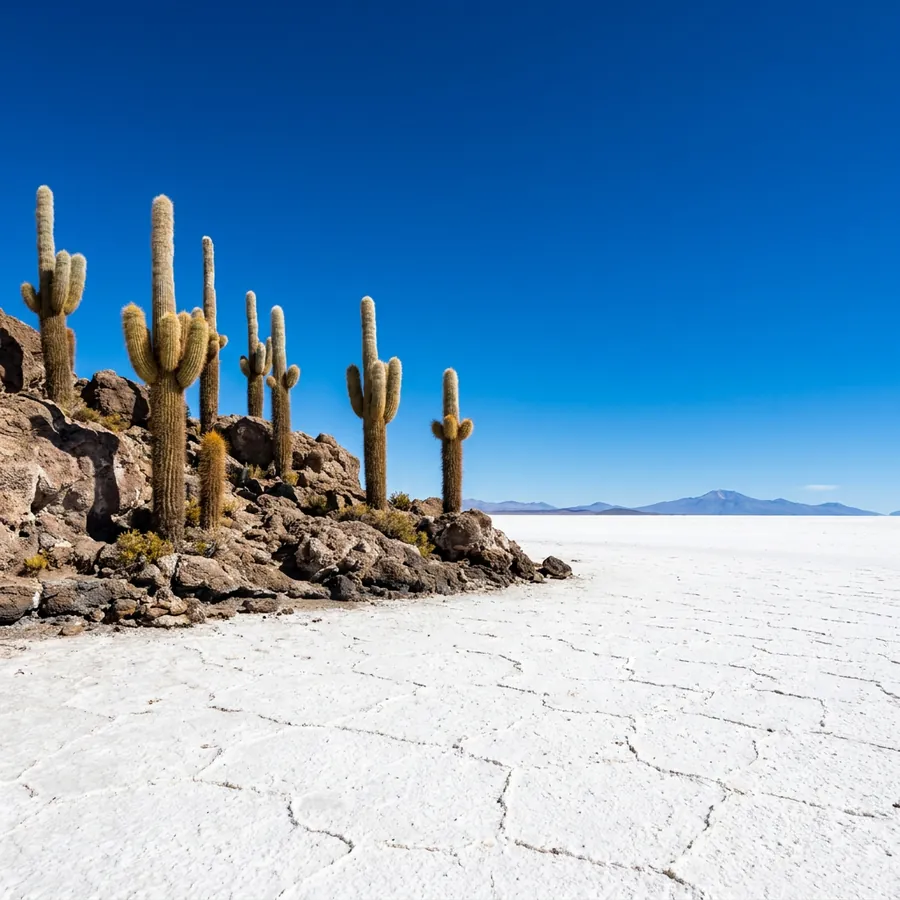
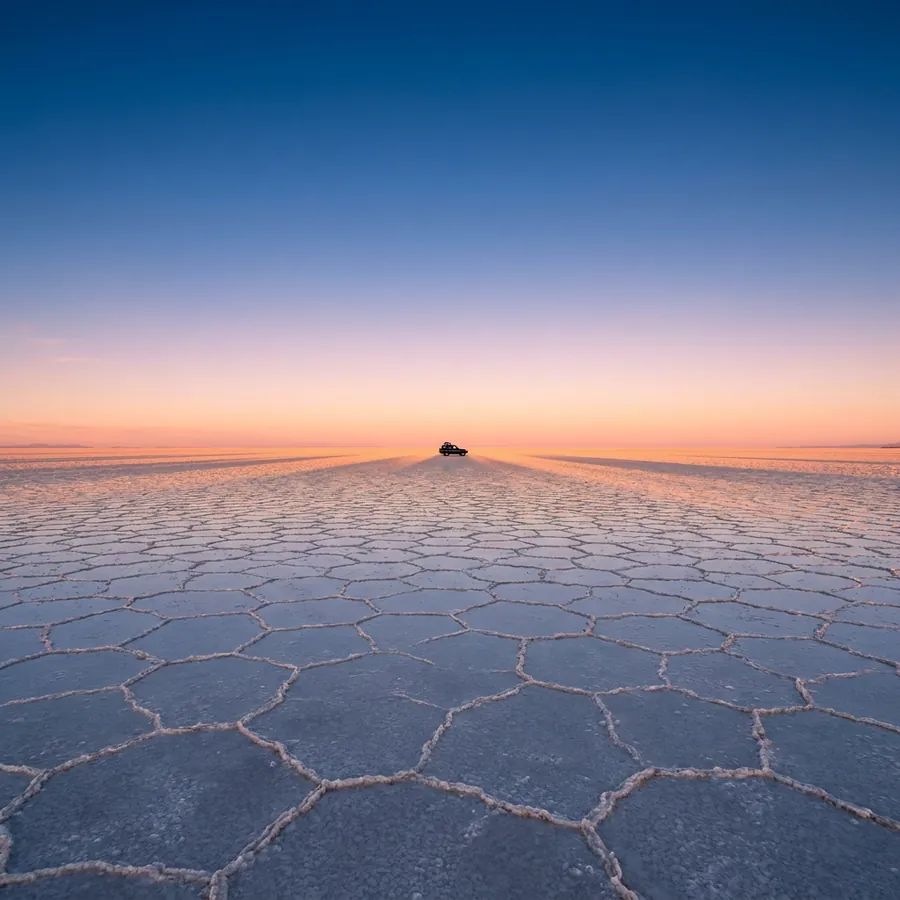
The finale is Salar de Uyuni: ten thousand square kilometers of white salt, with perfect hexagons, an island of giant cacti in the middle and lagoons with flamingos at four thousand meters. We sleep three nights in a hotel with walls, beds, and tables made of salt, right on the edge of the salt flat.
It's an altitude circuit — between 2,800 and 4,000 meters from day three onwards — built with acclimatization days and a slow pace. Small group, maximum 16 people, and a Romanian guide throughout.
Highlights
- Machu Picchu early in the morning, before the crowds, with a guided tour
- Salar de Uyuni: the salt hexagons, Isla Incahuasi and sunset on the salar
- Three nights in a hotel built from salt, at the edge of the salt flat
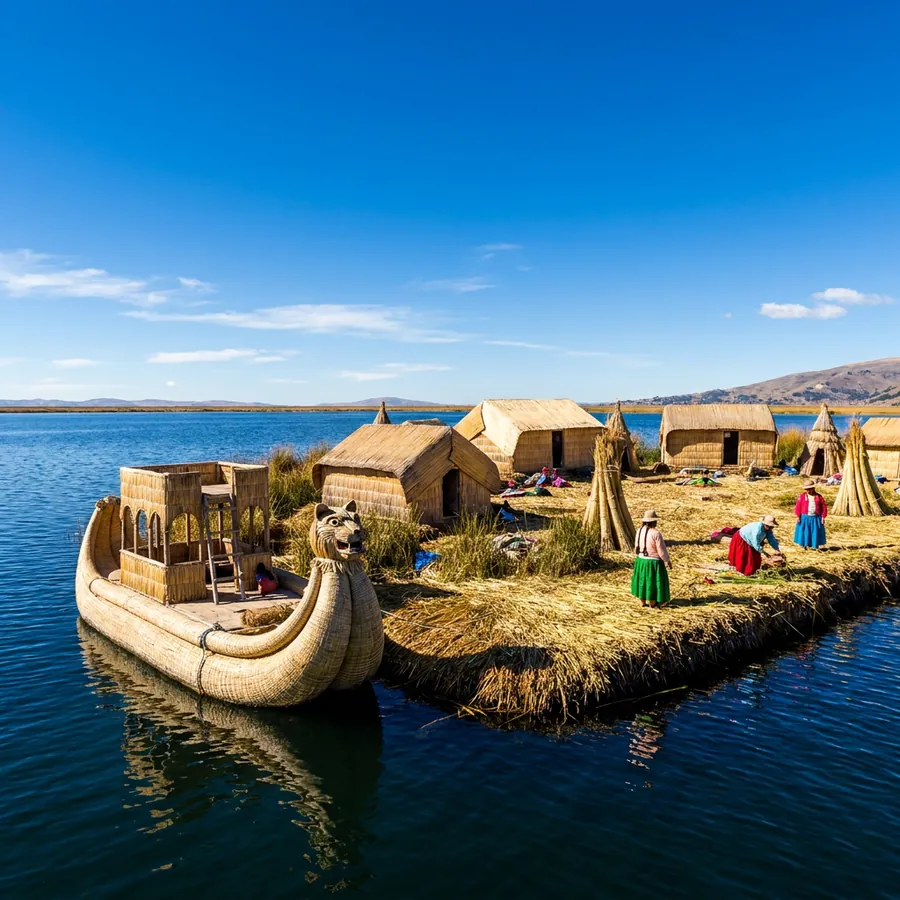
- Floating reed islands on Titicaca and lunch with a family in Taquile
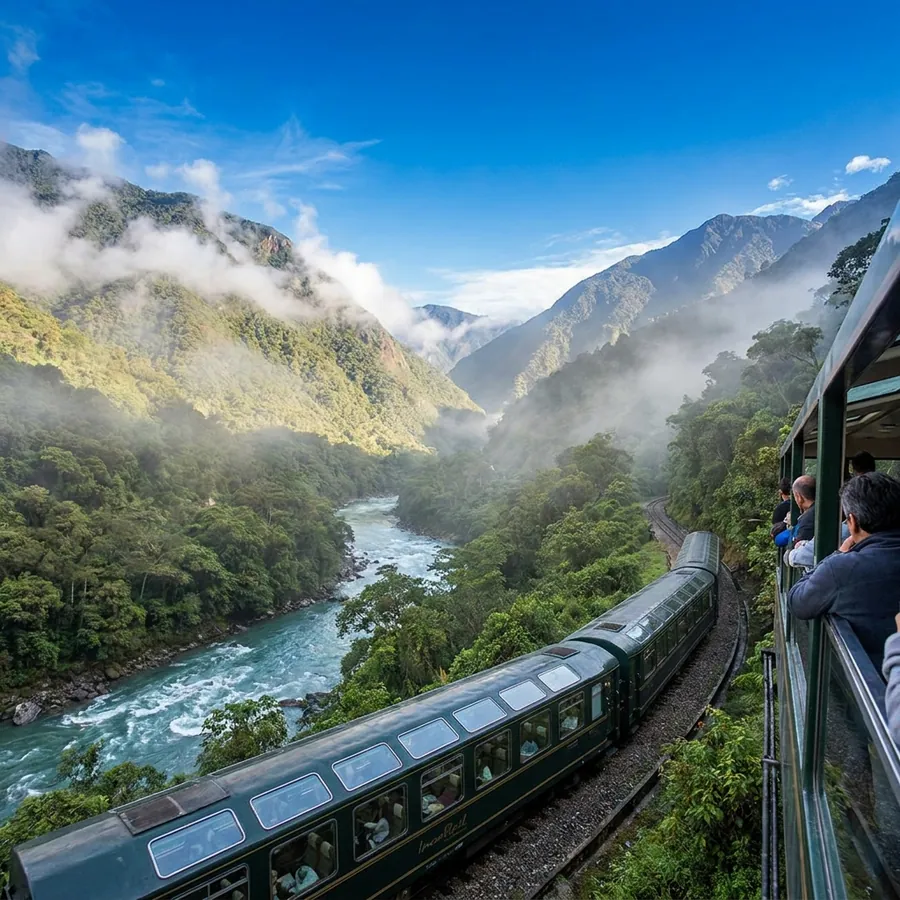
- The panoramic train through the Urubamba gorge, from Ollantaytambo to Machu Picchu
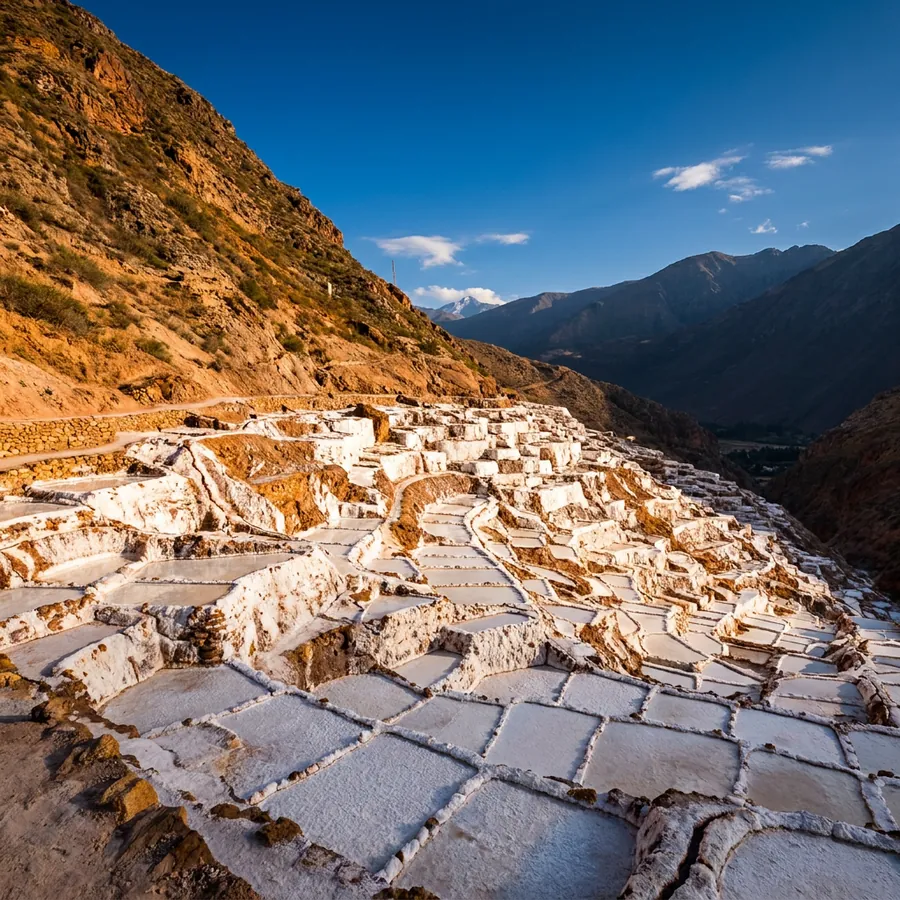
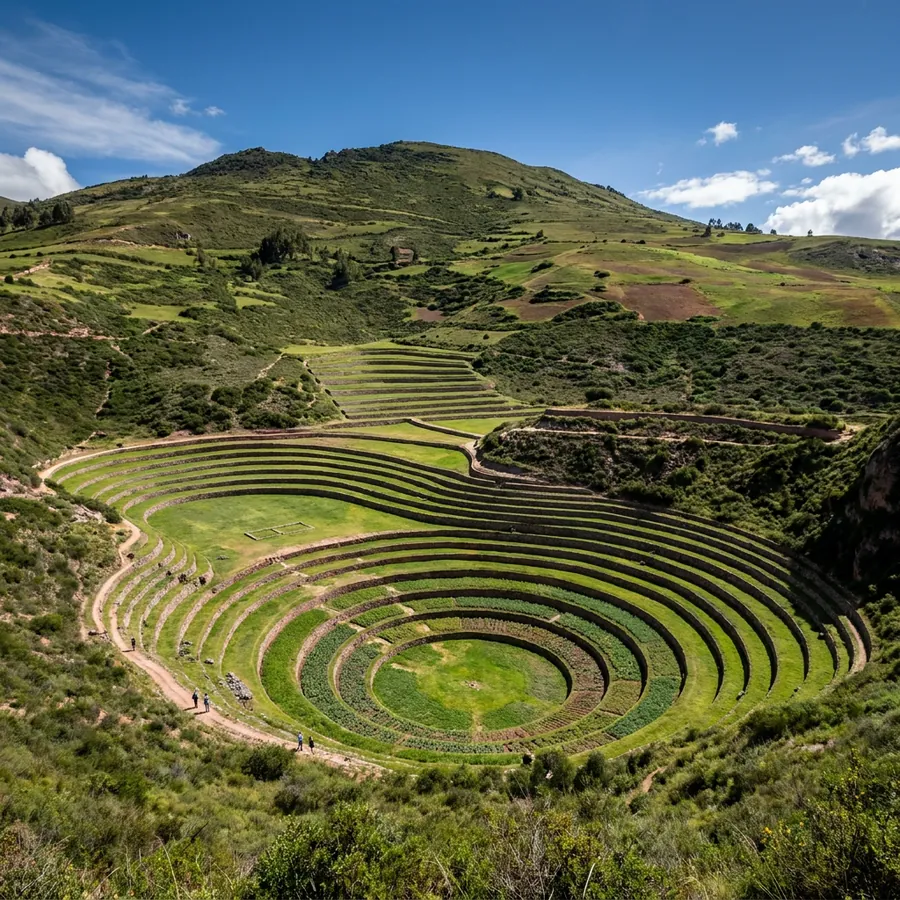
- The salt terraces of Maras and the amphitheater of Moray
- La Paz seen from the cable car, at 4,100 meters
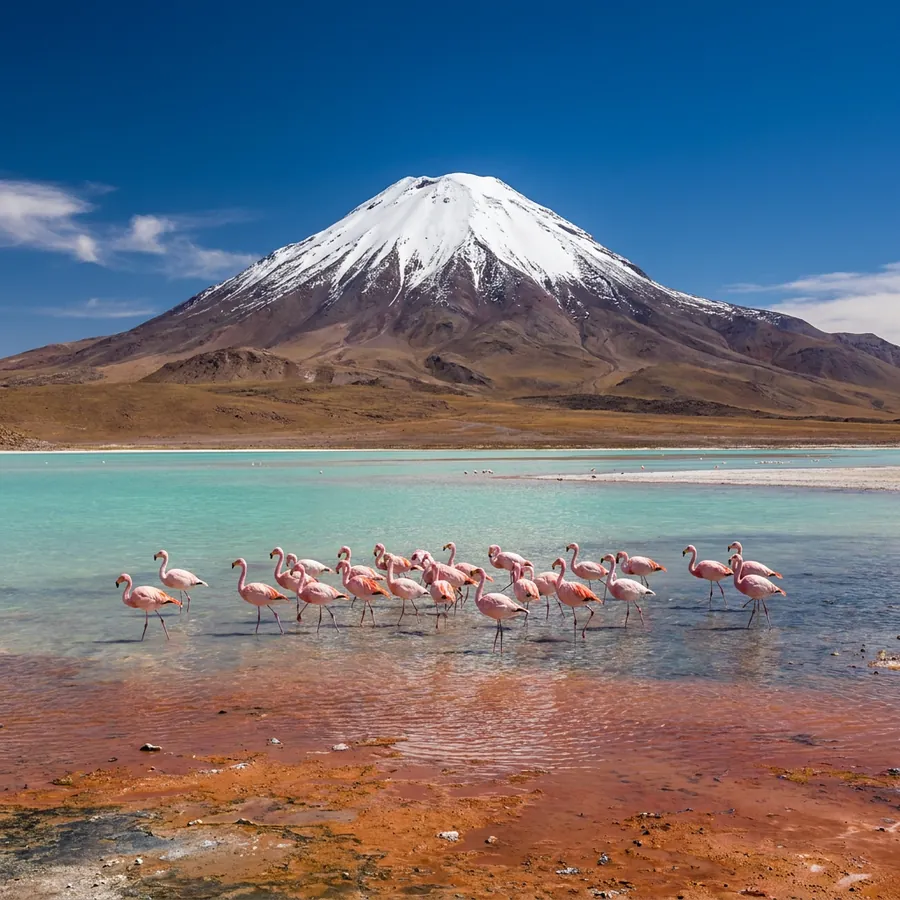
- Flamingo lagoons at over 4,000 meters, in South Lípez
- Isla del Sol, the birthplace of the Incas, and Copacabana
- Four domestic flights and gradual acclimatization, from 2,800 to 4,000 m
What's included
- Flight Bucharest -> Lima and La Paz -> Bucharest, with layovers;
- Domestic flight Lima -> Cusco;
- Domestic flights La Paz -> Uyuni and Uyuni -> La Paz;
- Airport taxes and one checked baggage of 23 kg;
- 12 nights accommodation: 4-5* hotels, a hacienda in the Sacred Valley and three nights at the salt hotel;
- Breakfast every morning;
- Lunch on the Ruta del Sol, at the community in Taquile, on Isla Incahuasi and packed lunch on the lagoons day;
- Panoramic train Ollantaytambo -> Aguas Calientes and return to Cusco;
- Entrance ticket to Machu Picchu, with bus up and guided tour;
- Tourist bus Cusco -> Puno (Ruta del Sol), with stops and guide;
- Boat trip to Uros and Taquile islands;
- Boat to Isla del Sol and all transfers in Bolivia;
- Two days with 4x4 vehicles on Salar de Uyuni and in Sud Lípez, with driver-guides;
- Cusco tourist ticket (Sacsayhuamán, Pisac, Ollantaytambo, Moray) and entrances to Maras, Qorikancha, San Francisco, Mi Teleférico;
- All transfers with private air-conditioned coach;
- Romanian escort throughout the circuit;
- Local English-speaking guides in Peru and Bolivia;
- Travel medical insurance, with altitude coverage;
- Meals not mentioned as included;
- Drinks at meals;
- Optional activities;
- The entry fee to Bolivia for Romanian citizens does not apply; for other citizens, check upon registration;
- Tips for guides, drivers and visited communities;
- Cancellation insurance;
- Personal expenses;
Attractions and activities
Reviews
24 Septembrie 2025
20 Septembrie 2025
10 Septembrie 2025
13 August 2025

Many thanks to the two wonderful young people, Alex and Șerban, who organized this unforgettable trip! You were involved, attentive, generous and made us feel pampered and safe every step of the wa...
13 August 2025
Detailed itinerary
14 days of adventure, organized step by step
We depart early in the morning from Otopeni, with a layover in Amsterdam, and cross the Atlantic during the day. We land in Lima in the evening, local time — eight hours behind Romania — and settle into Miraflores, the cliffside neighborhood.
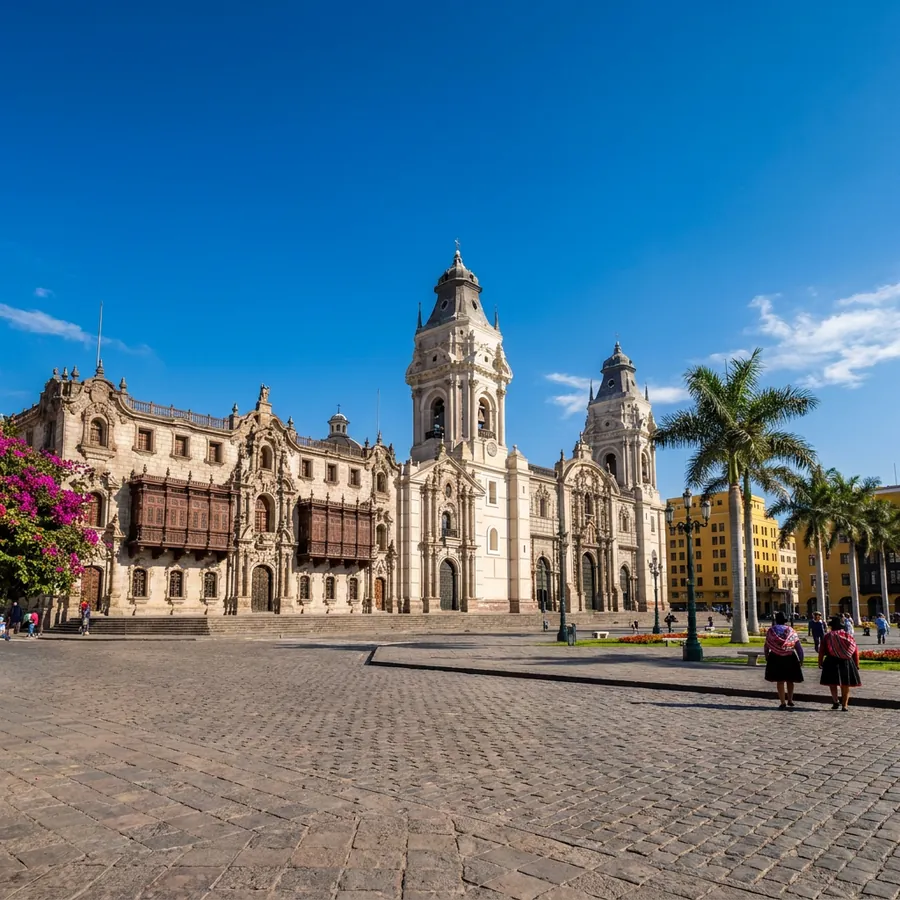
In the morning, the historic center: Plaza de Armas, with the cathedral and the government palace, and the San Francisco monastery, with its old library and catacombs where the bones of twenty-five thousand people are arranged.
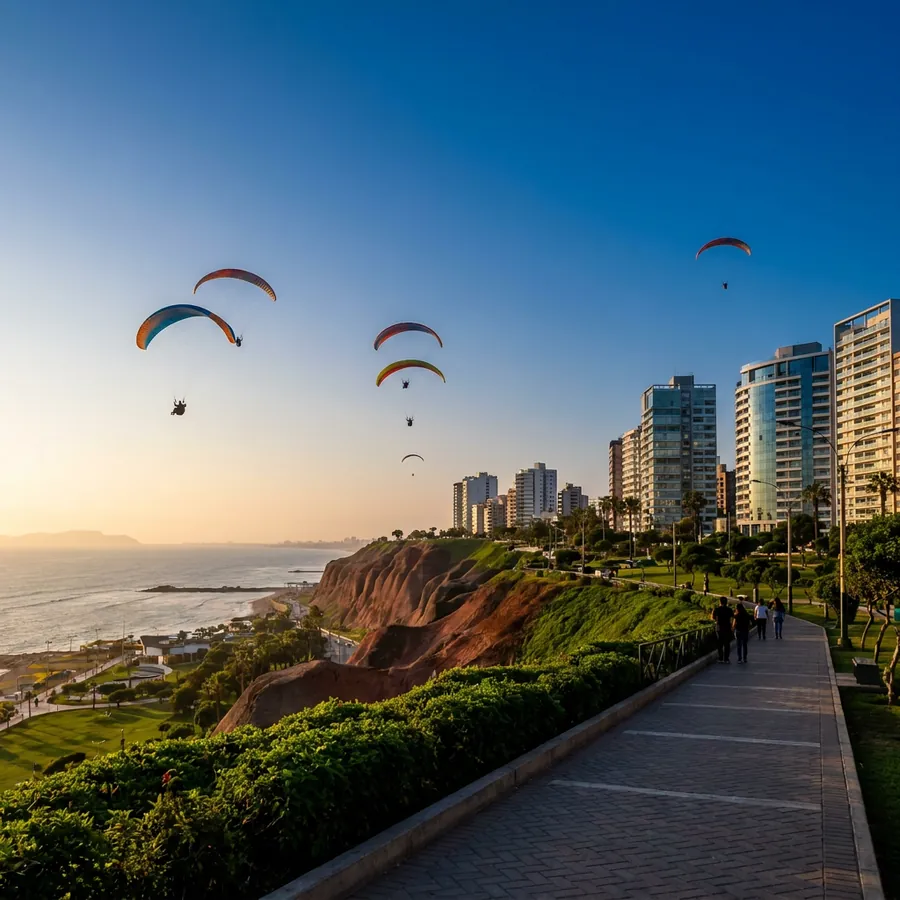
In the afternoon, Barranco, the bohemian district with colorful houses and the Bridge of Sighs, and the Miraflores cliff, from where paragliders take off over the Pacific. In the evening, the first Peruvian cooking lesson: ceviche, in the city that invented it.
An hour and twenty minutes flight over the Andes. In Cusco we are at 3,400 meters, so we don't stay: we descend directly into the Sacred Valley, at 2,800, where acclimatization is milder.
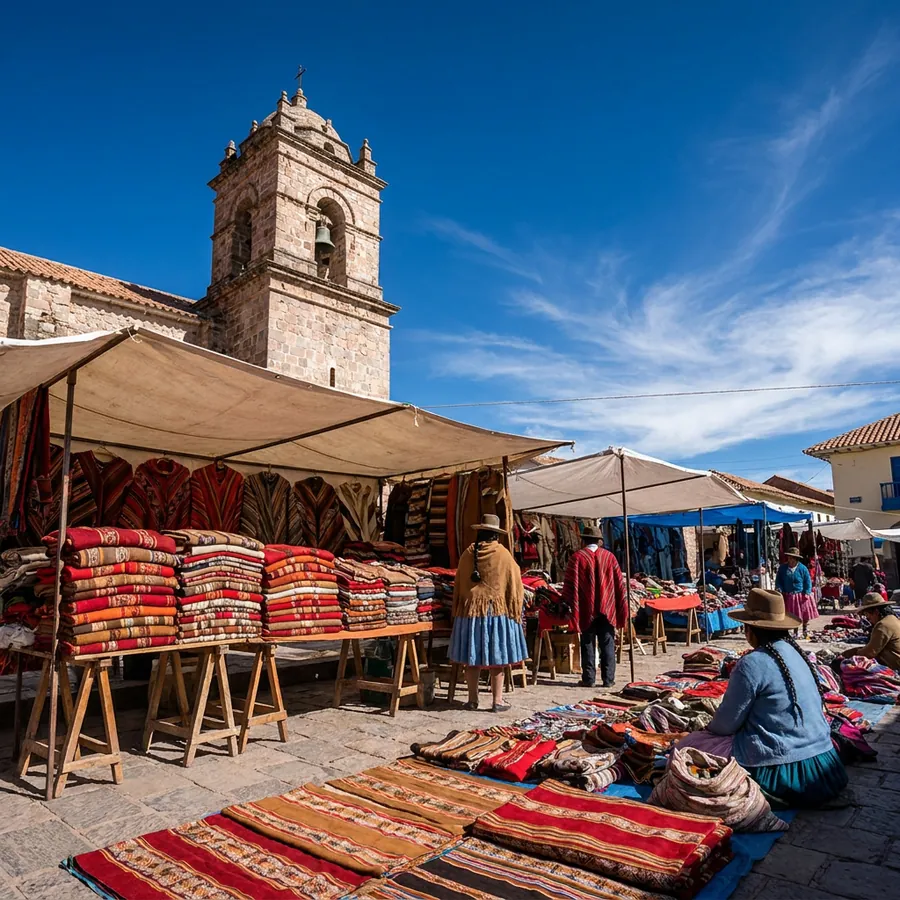
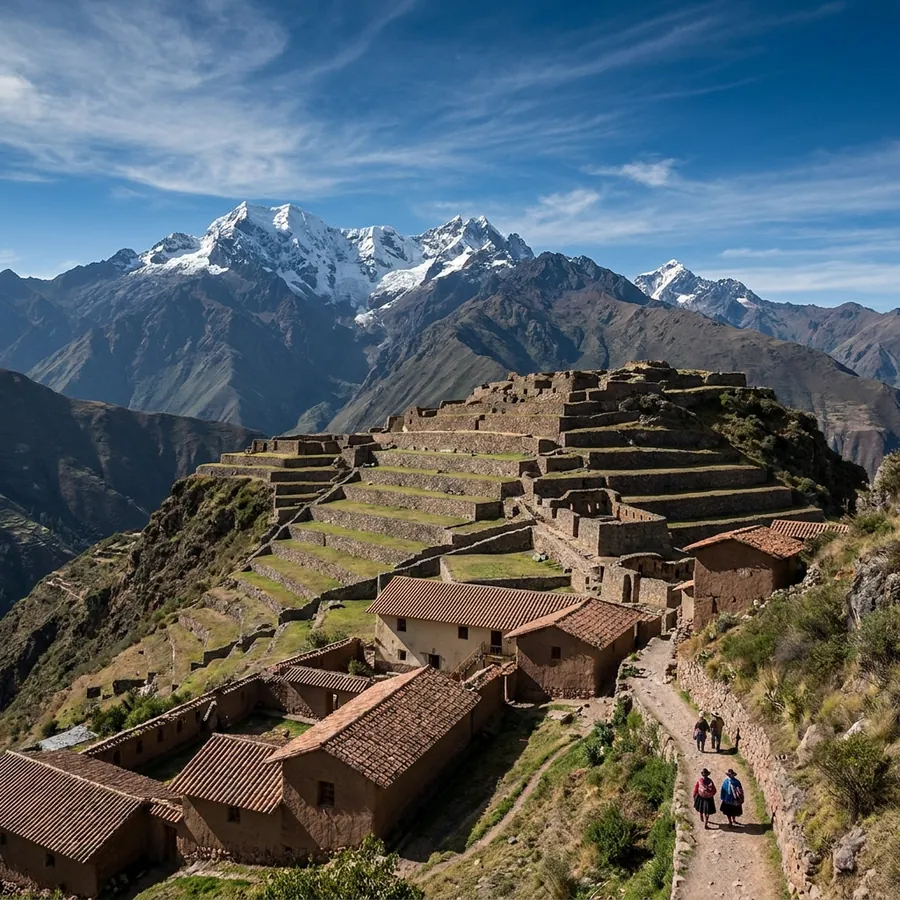
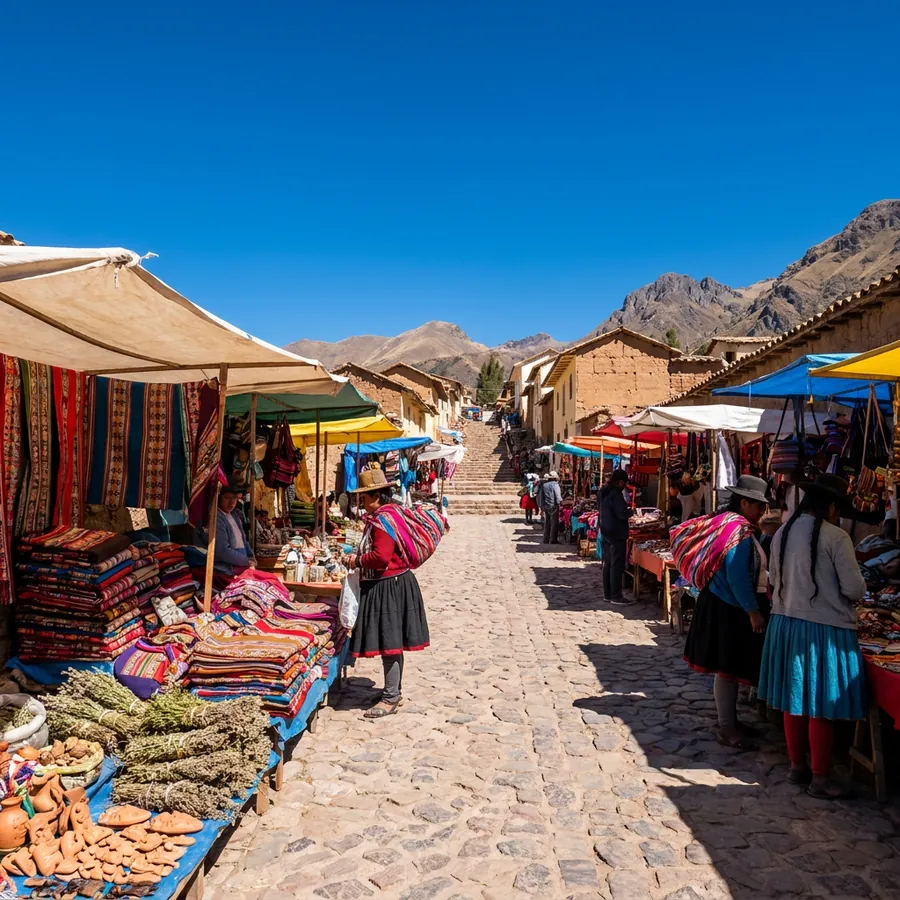
We stop at Pisac, at the ruins on the ridge — agricultural terraces that descend hundreds of meters — and at the village market, the most colorful in the region. We check into a 17th-century hacienda, on the river bank, and rest: it's the day the body gets used to the thin air.
Maras: three thousand stepped salt ponds on a hillside, fed by a salty spring and worked by the same pre-Inca families. Then Moray, the circular terraces dug into the earth like an amphitheater, where the Incas tested crops at different temperatures.
In the afternoon, Ollantaytambo, the only continuously inhabited Inca city, with its fortress climbing the hill in giant terraces. From here we take the train with panoramic windows, an hour and a half through the Urubamba River gorge, to Aguas Calientes, the village at the foot of the mountain.
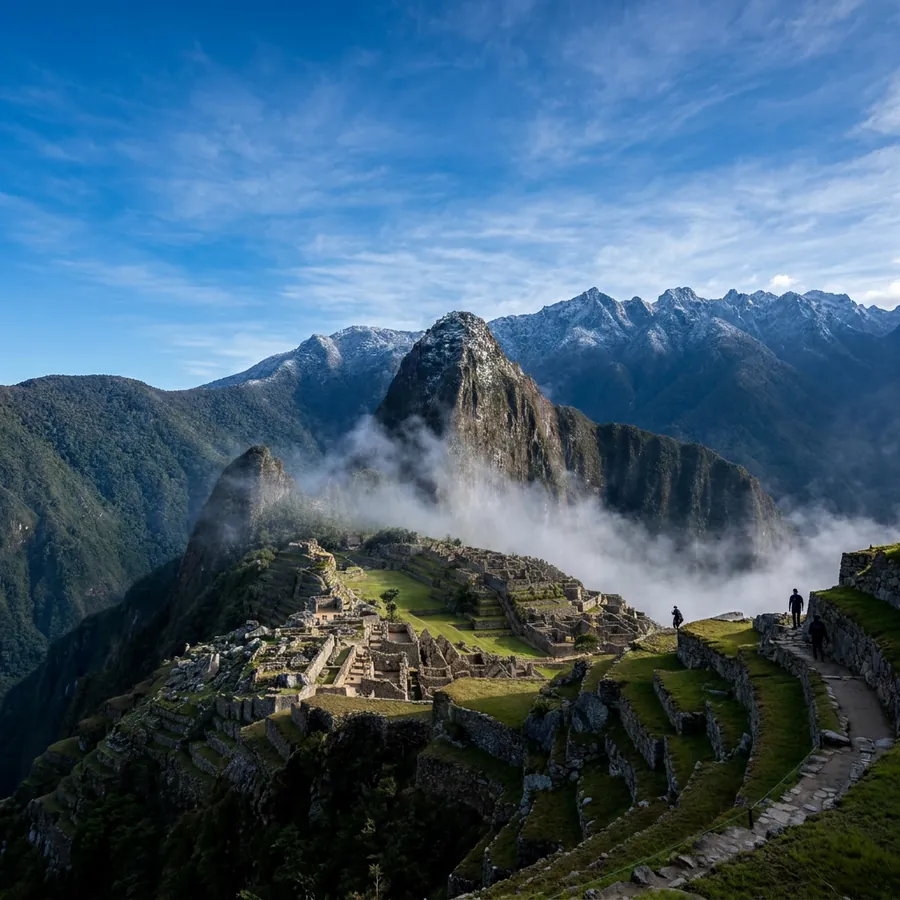
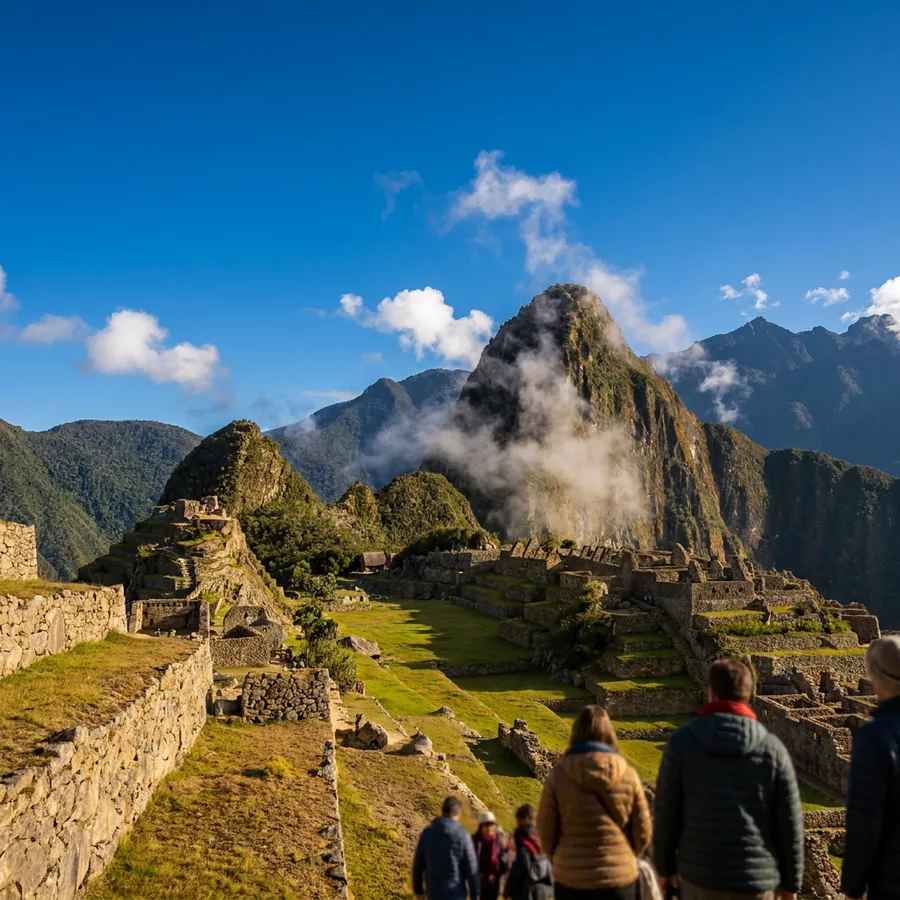
We take the first buses, before seven, when the mist is still rising from the valley. Machu Picchu appears suddenly, whole: the terraces, the temples, the plaza and Huayna Picchu peak in the background. A three-hour guided tour of the city — the Temple of the Sun, Intihuatana, the stone that "ties the sun", the residential quarter.
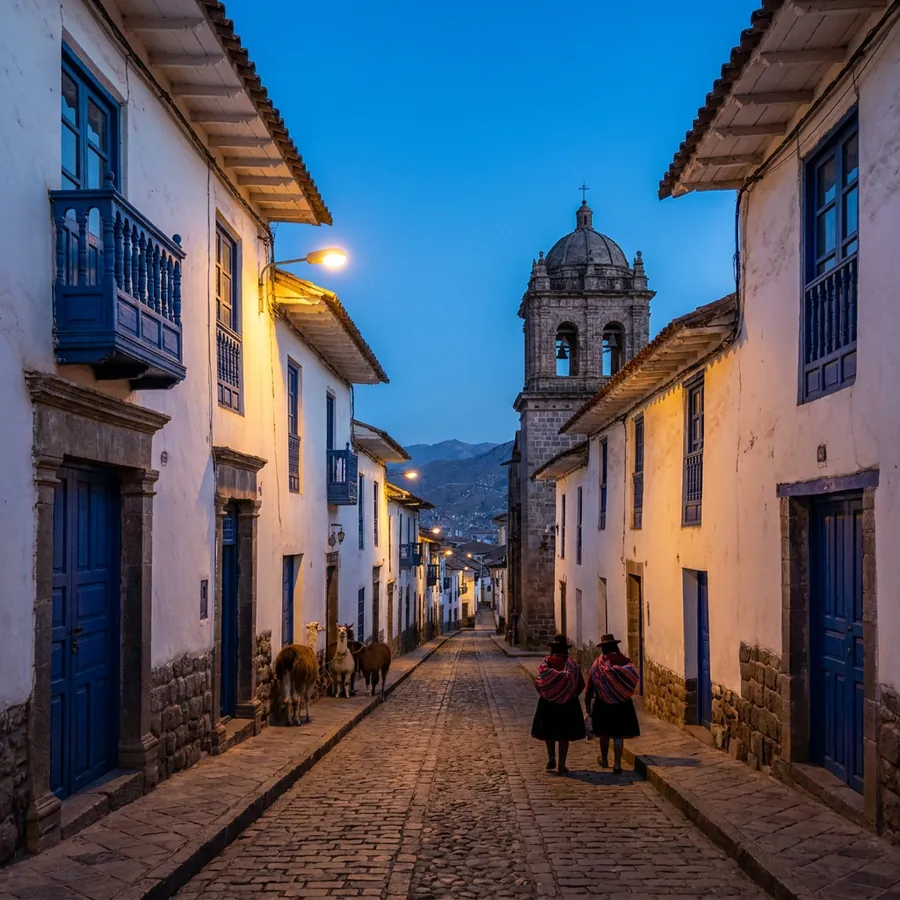
We stay until noon, then descend to the train and return to Cusco, where we arrive in the evening. We check into a colonial house a few minutes from Plaza de Armas.
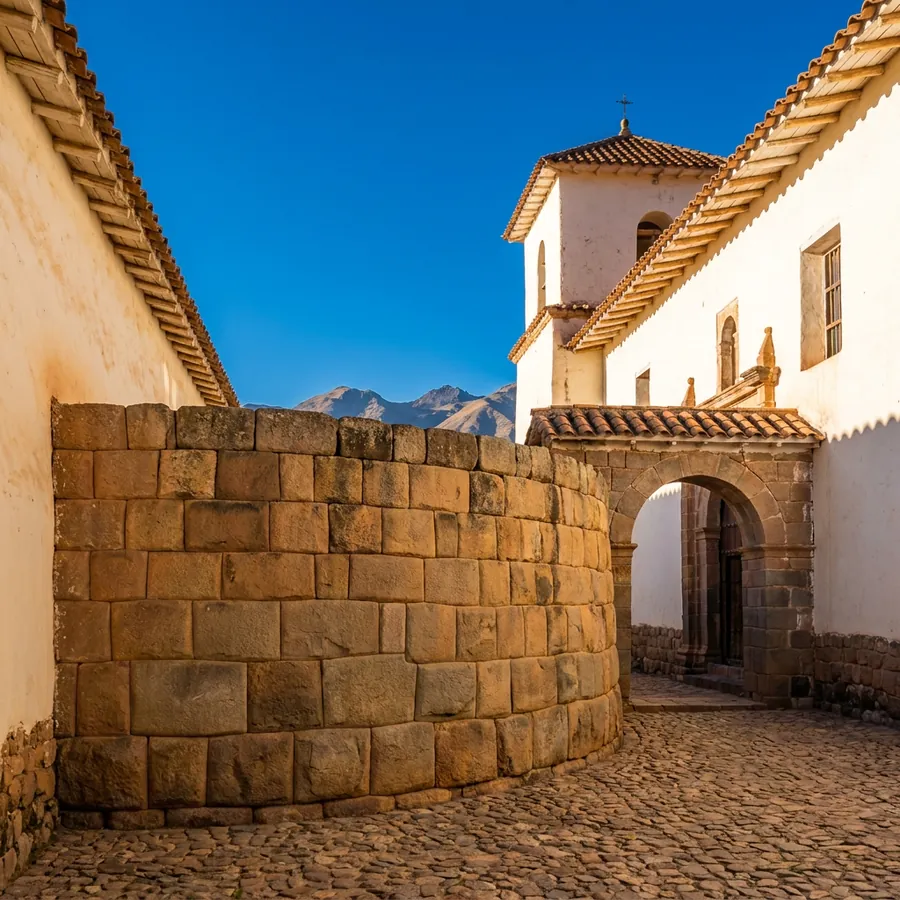
Qorikancha, the Temple of the Sun, was covered with gold plates; the Spanish melted them down and built a monastery over the walls. The walls remained - earthquakes demolished the monastery several times, but not the Inca stones beneath it. We continue with the cathedral and San Pedro market, where we will have lunch.
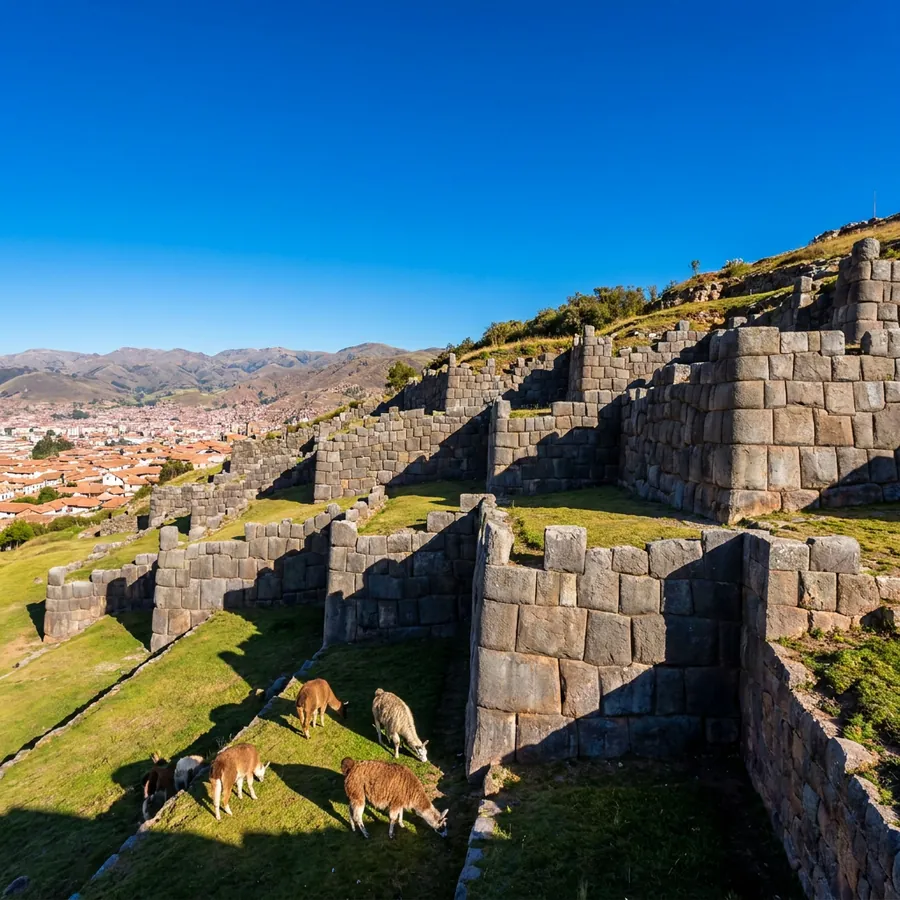
In the afternoon we ascend to Sacsayhuamán, the fortress with zigzag walls made of hundred-ton blocks, fitted without mortar so precisely that not even a blade can fit between them. In the evening, San Blas, the artists' quarter, with steep streets and workshops.
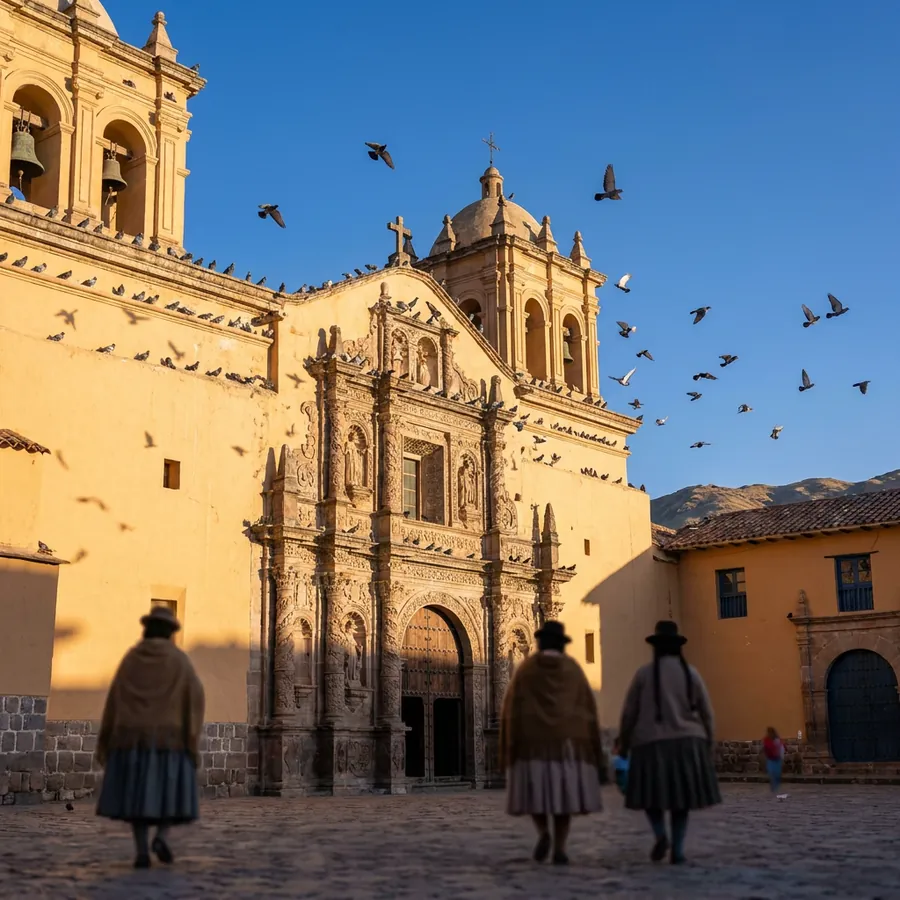
A day on the road, but one of the most beautiful in South America. We stop at Andahuaylillas, the "Sistine Chapel of the Andes", a small village church with its interior entirely covered in paintings, and at Raqchi, the temple of Wiracocha, with its twenty-meter wall.
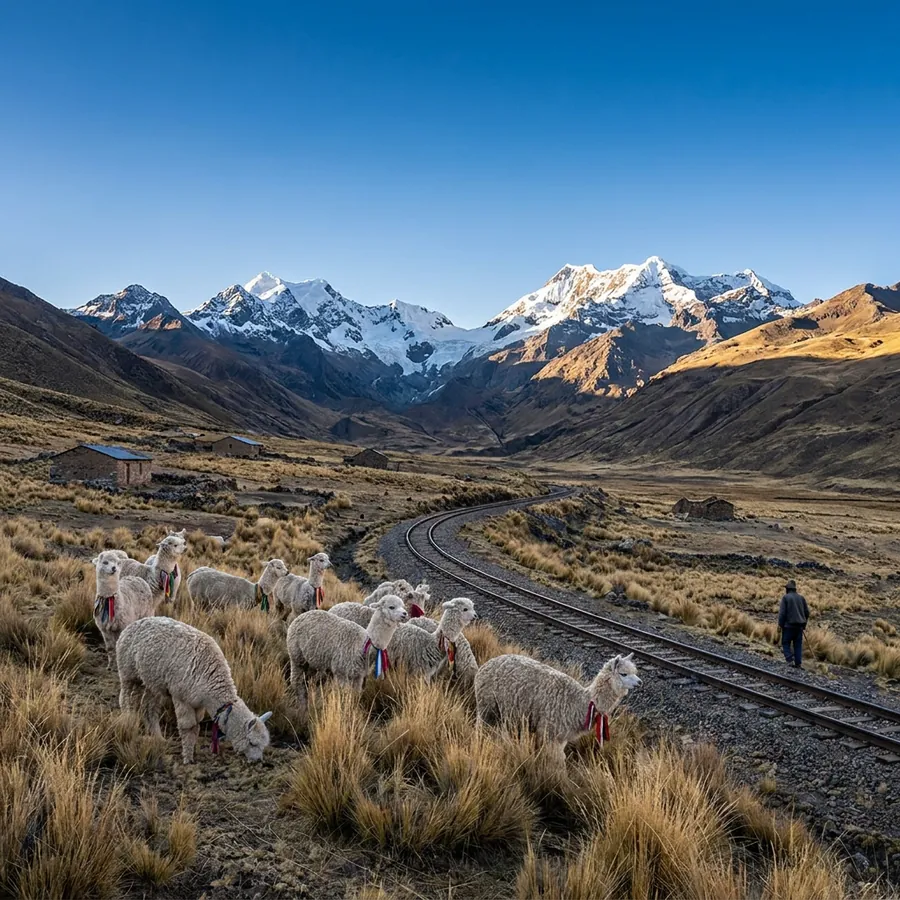
We cross the La Raya pass, at 4,335 meters — the highest point of the circuit, with vicuñas on the meadows and snow-capped peaks — and descend onto the altiplano, the treeless plateau, down to Puno, on the shore of Lake Titicaca. We stay on an island connected to the shore, with the lake all around.
By boat on the highest navigable lake in the world, at 3,800 meters. The first stop is at the Uros islands: about a hundred islands built from reeds, which the community rebuilds layer by layer, for centuries. You step on them and they sink a little beneath you. Houses, school and boats — all made from the same reeds.
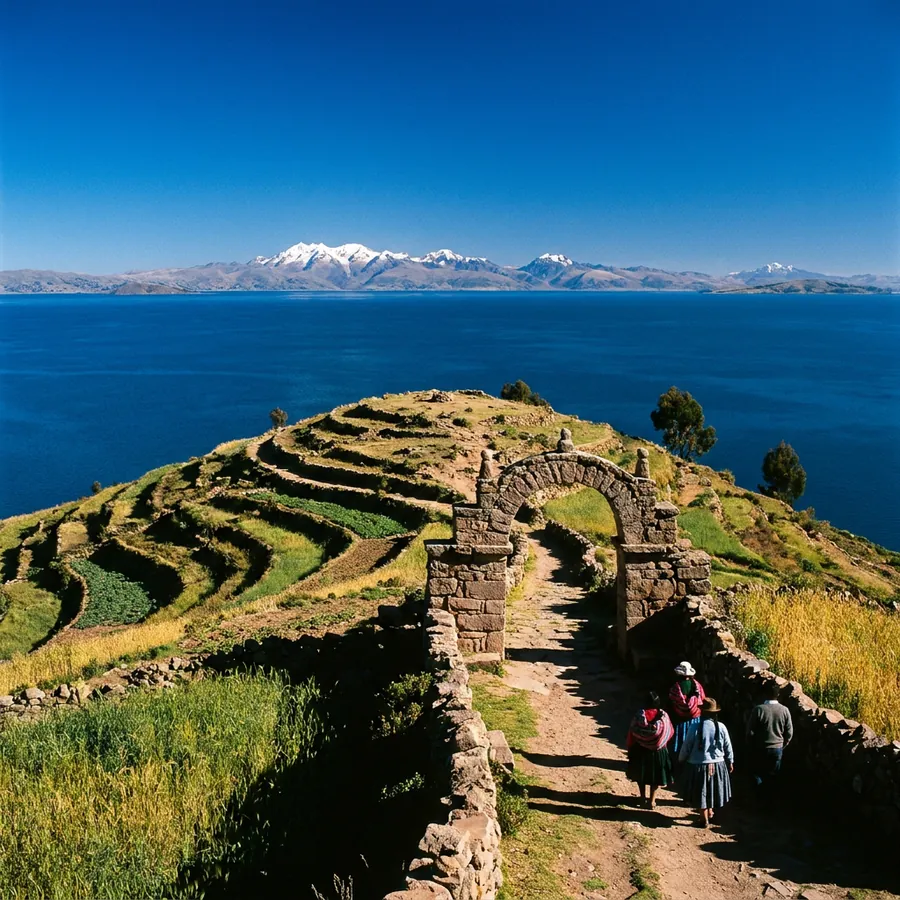
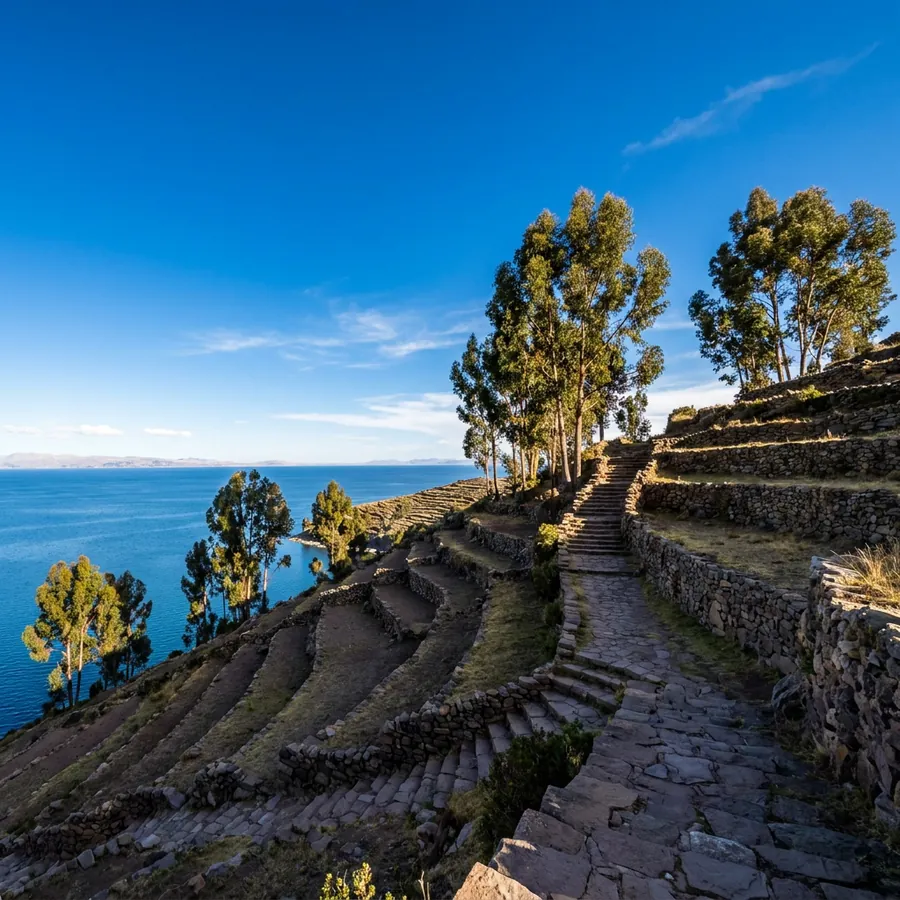
We continue to Taquile, the island where men knit and where there are no cars or dogs. We climb the stone path to the village for lunch cooked by a family — lake trout and quinoa — with the dark blue lake below us and the Bolivian mountain range on the horizon.
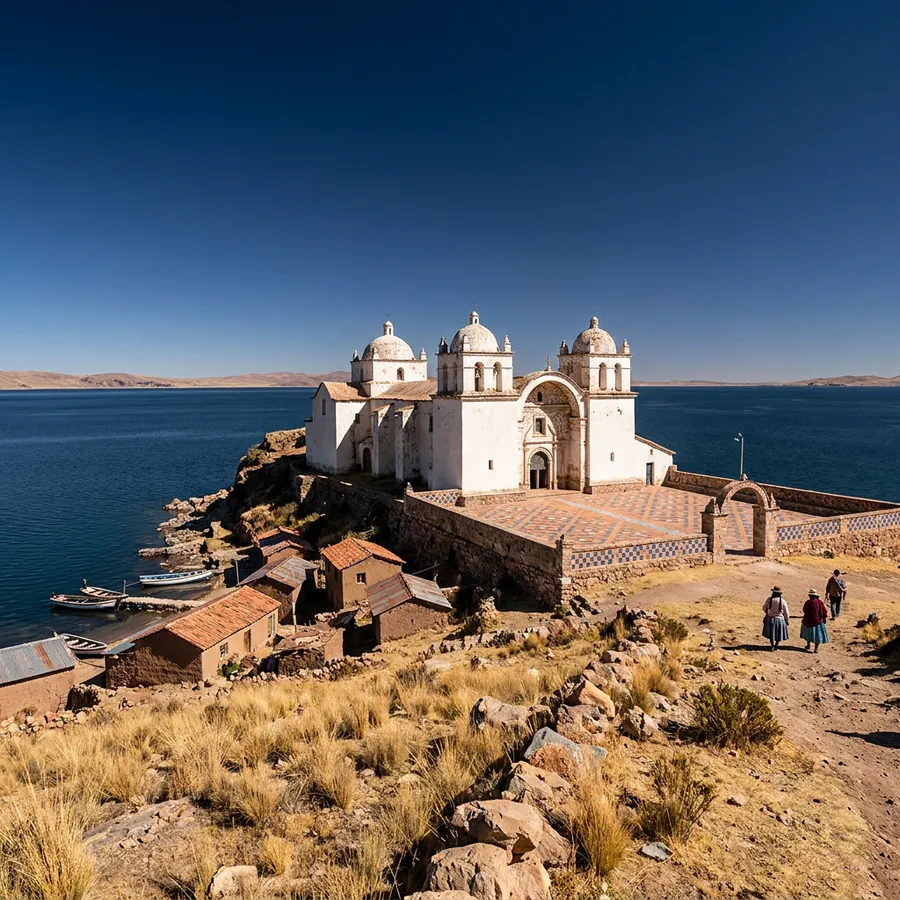
We cross the border at Kasani and arrive at Copacabana, the pilgrimage town with its white Moorish-style basilica. From here, by boat, to Isla del Sol, the place where, according to legend, the god Wiracocha made the sun rise and where the first Incas were born: terraces, a temple, and a ridge path, with the lake on both sides.
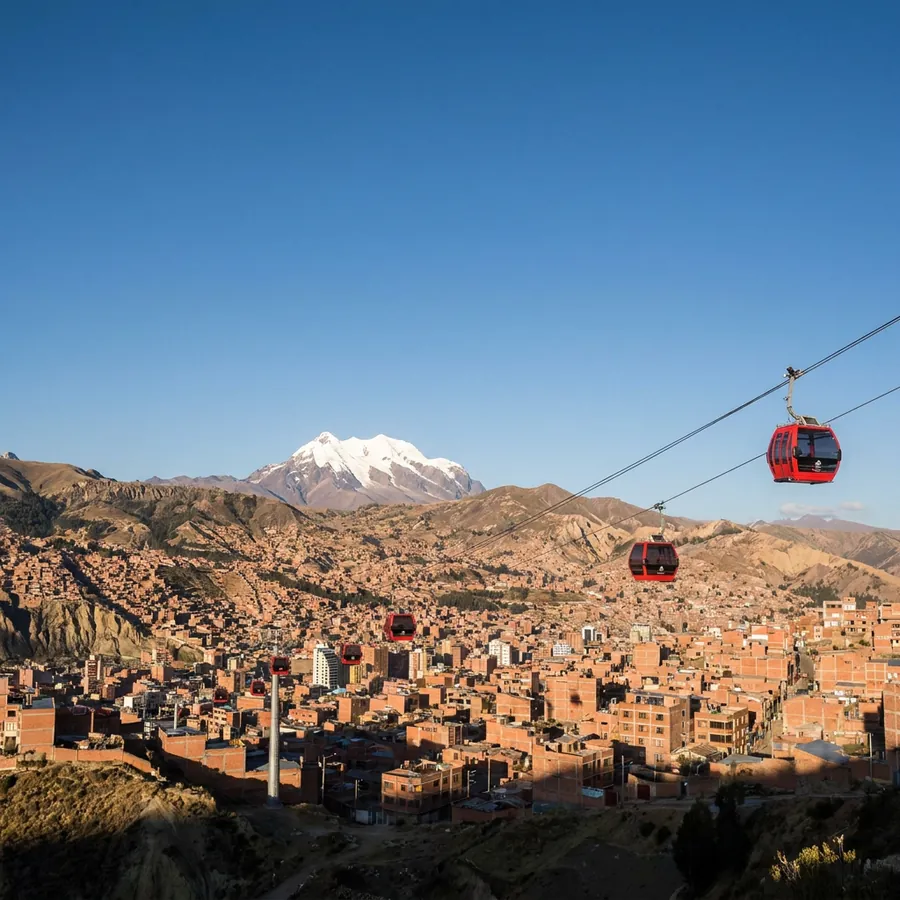
In the afternoon, we head to La Paz: the bus crosses the Tiquina Strait on a barge, then we ascend the altiplano and suddenly descend into a city nestled in a huge crater, with the 6,400-meter Illimani behind it.
La Paz is the city with the largest cable car network in the world — eleven lines, instead of a subway, because the hills are too steep. We take two of them, up to El Alto, at 4,100 meters, from where the entire city can be seen, in the crater.
We walk down through the witches' market, with herbs, amulets and offerings for Pachamama, and pass by Valle de la Luna, a labyrinth of eroded rocks on the outskirts of the city. In the evening, a fifty-minute flight to Uyuni and the first night in the salt hotel.
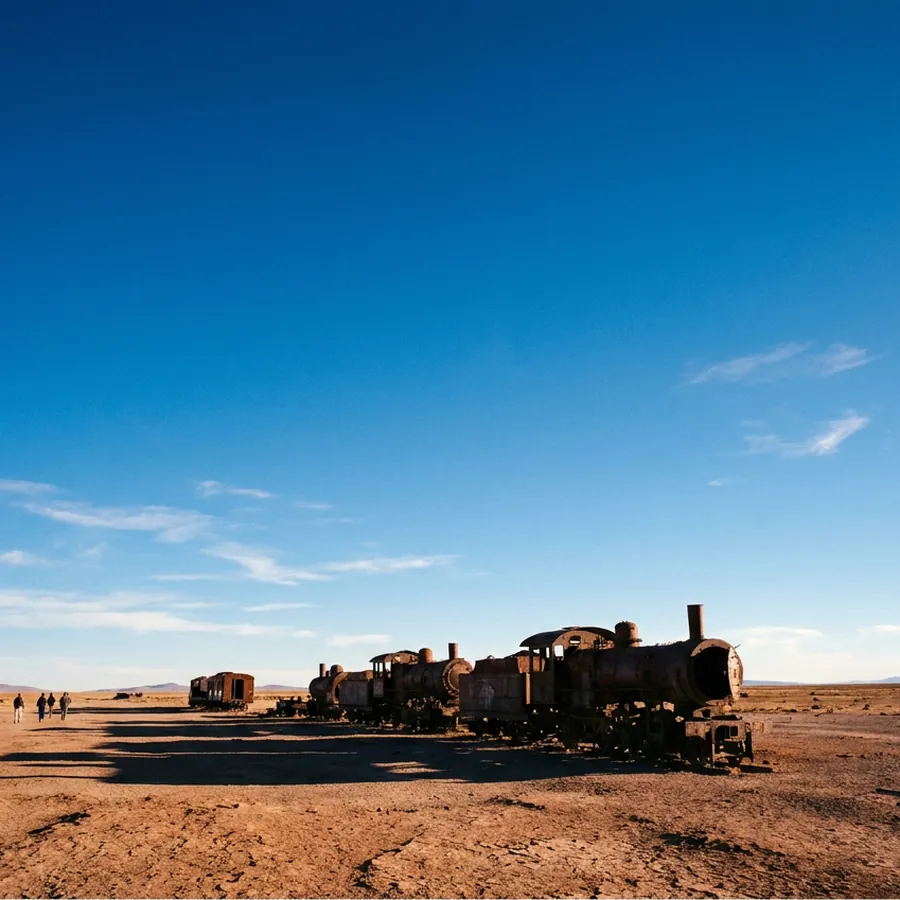
The day worth the journey here. We set off in 4x4 cars past the train cemetery, steam locomotives rusted in the desert, and through Colchani, the village where salt is gathered in mounds. Then we enter the salar: ten thousand square kilometers of white, with the crust cracked into perfect hexagons, and the sky so blue that the horizon is no longer visible.
Lunch is on Isla Incahuasi, a rock island in the middle of the salt, covered with ten-meter cacti, a thousand years old. In the afternoon, the perspective photos that everyone knows — they can't be missed, there's nothing around to give scale — and the sunset on the salar, when the salt turns pink.
We exit the salt flat to the south, into Sud Lípez, the highest and most desolate region of Bolivia. The road passes by Ollagüe volcano, with active fumaroles, and reaches a series of lagoons at over 4,000 meters — Cañapa, Hedionda, Honda — each a different color, from turquoise to rusty, due to the minerals.
On all of them live colonies of flamingos, three species, pink on the green water, with snow-capped volcanoes in the background. Packed lunch on the shore of the lagoon, then we return to the salt hotel for the last night.
In the morning we fly from Uyuni to La Paz, from there to Lima, and in the evening we depart across the Atlantic to Amsterdam. We spend the night on the plane.
We land in Amsterdam in the afternoon and in Bucharest in the evening.
Hotels
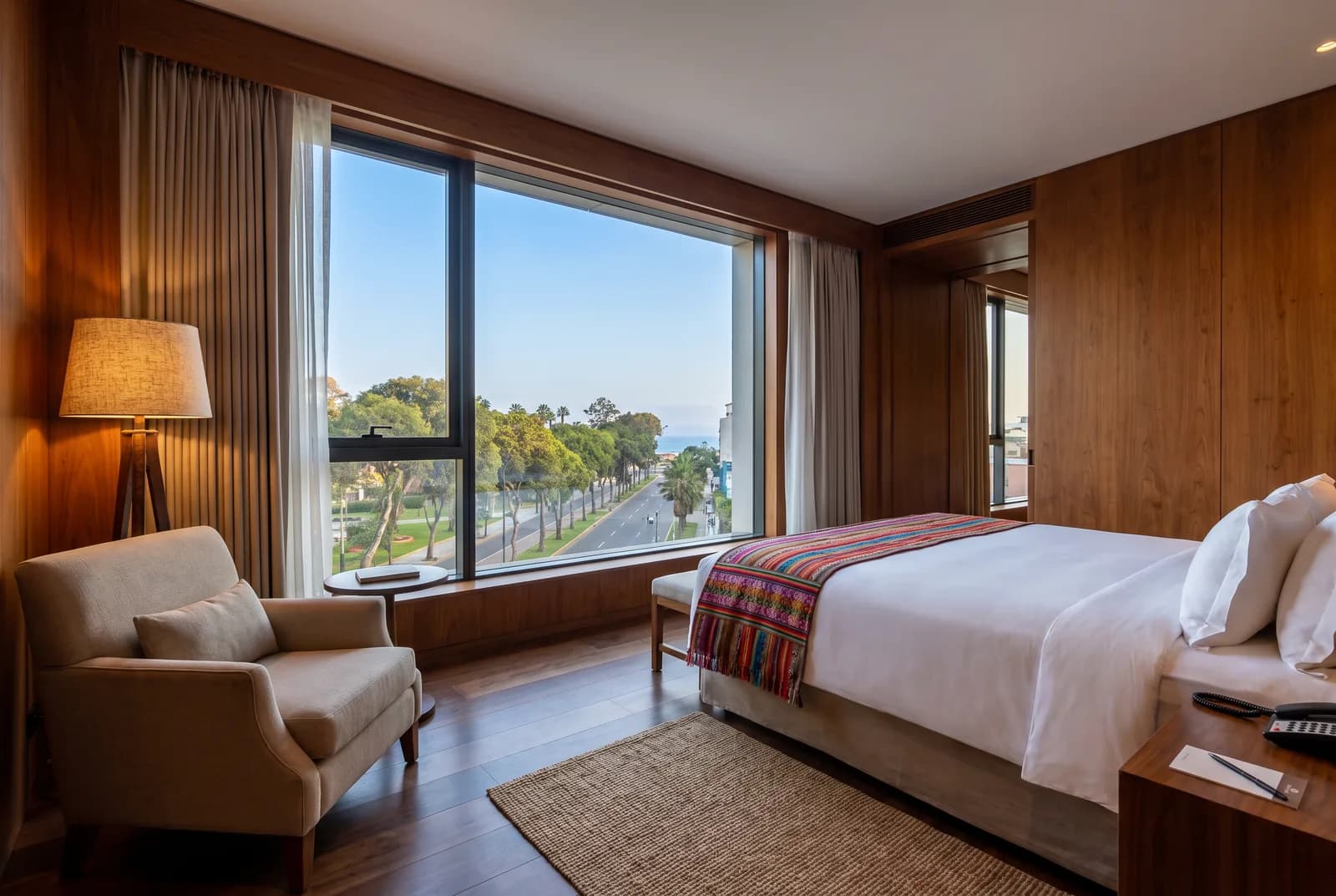
Casa Andina Premium Miraflores
Four-star hotel in the heart of the Miraflores district, a few minutes' walk from the boardwalk and Kennedy Park. One hundred and forty-eight rooms, Peruvian cuisine restaurant and rooftop terrace. The classic base for Lima.
The mentioned hotel or a similar one of the same category. Final confirmation is made upon registration.
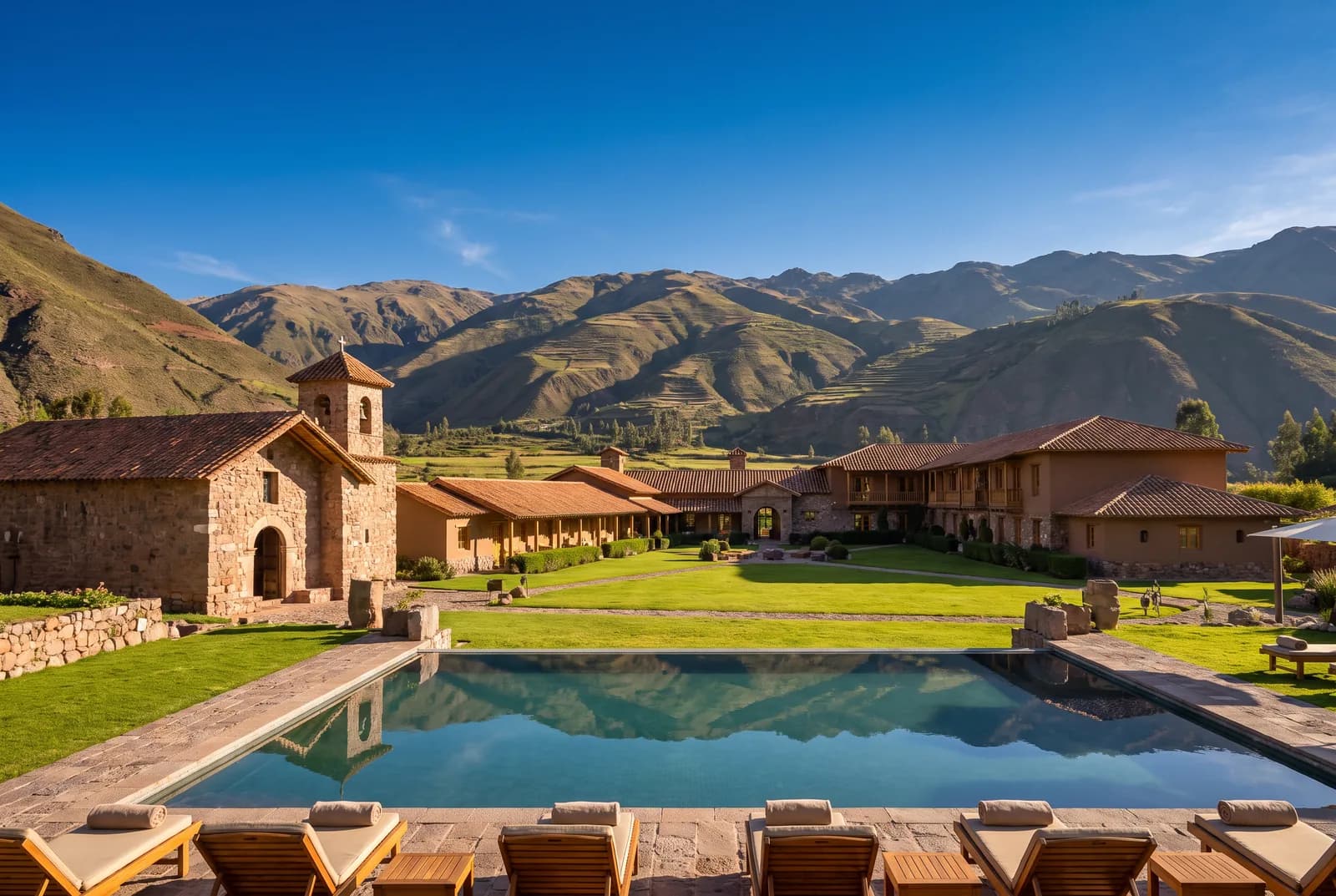
Aranwa Sacred Valley Hotel & Wellness
17th-century hacienda transformed into a five-star hotel, on the banks of the Vilcanota River, at 2,800 meters — the ideal altitude for the first night in the Andes. Old chapel, gardens, heated pool, and spa with acclimatization treatments.
The mentioned hotel or a similar one, of the same category. Final confirmation is made upon registration.
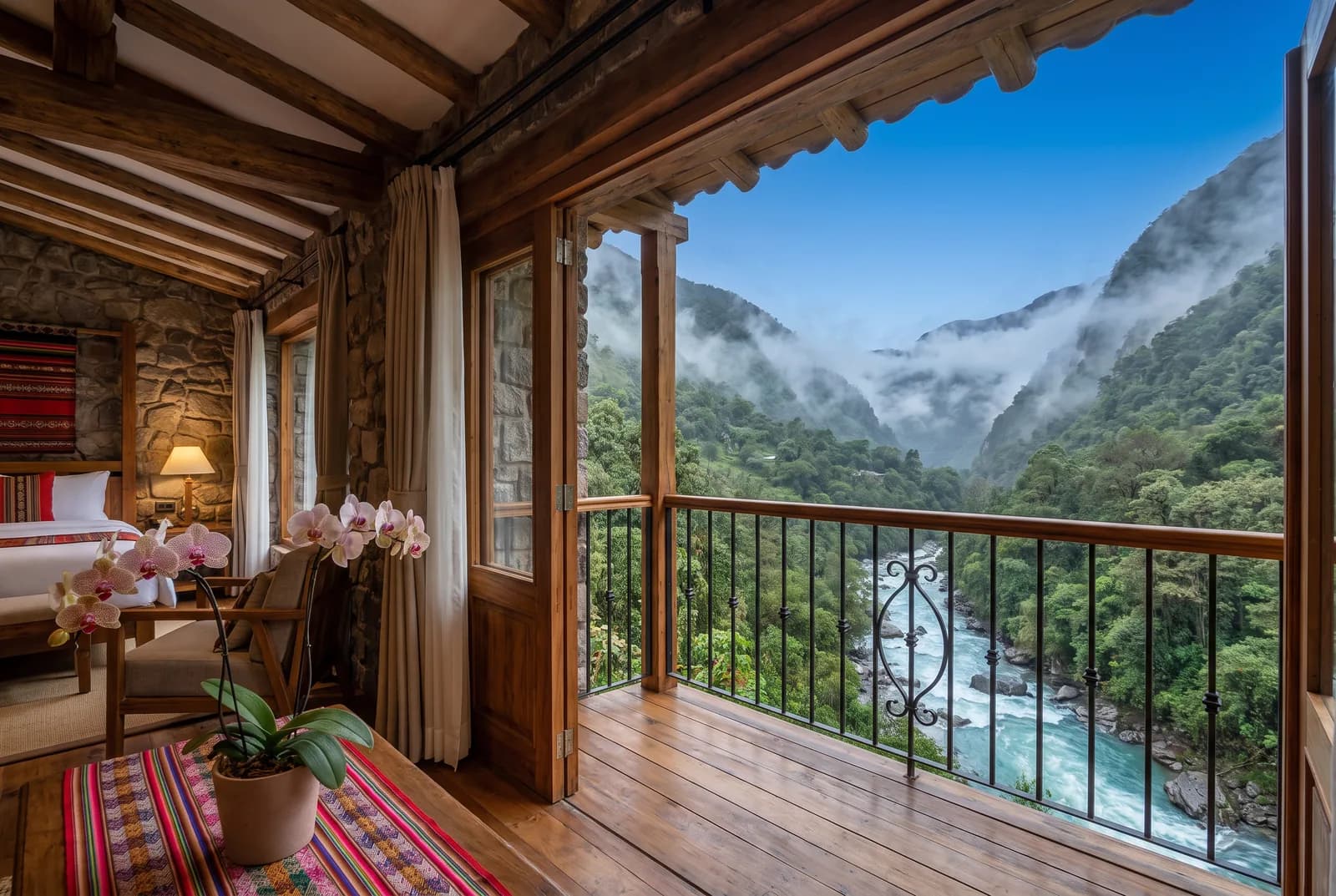
El MaPi by Inkaterra
Four-star hotel in Aguas Calientes, the village at the foot of Machu Picchu, a few minutes from the bus station for buses going up to the citadel. Modern rooms, late-opening restaurant and breakfast from five in the morning, for early departure.
The mentioned hotel or a similar one of the same category. Final confirmation is made upon registration.
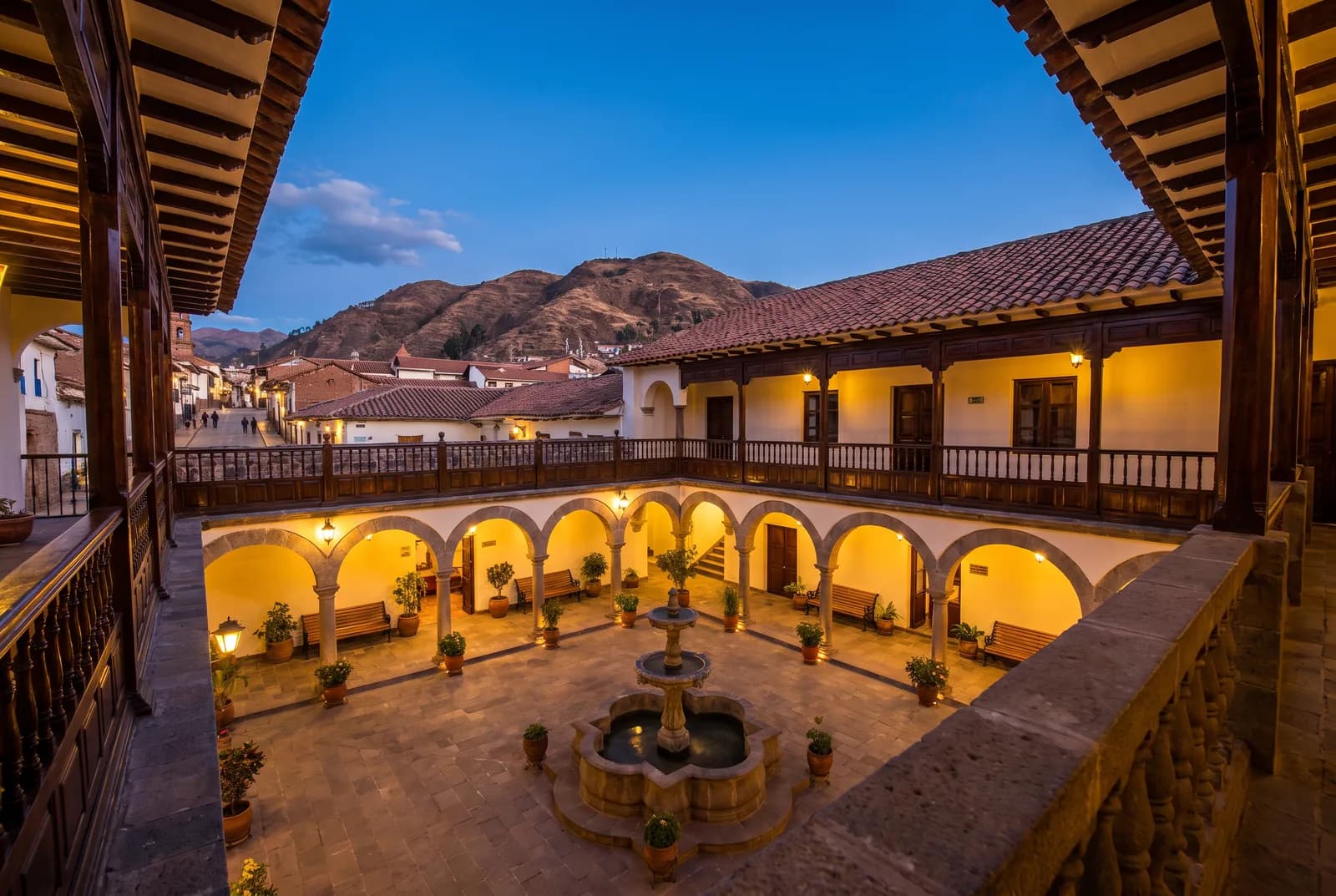
Casa Andina Premium Cusco
18th-century colonial house, with an interior courtyard with stone arches and wooden balconies, an eight-minute walk from the Plaza de Armas. Ninety-three rooms, oxygen on demand, and coca tea at the reception – for 3,400 meters.
The mentioned hotel or a similar one, of the same category. Final confirmation is made upon registration.
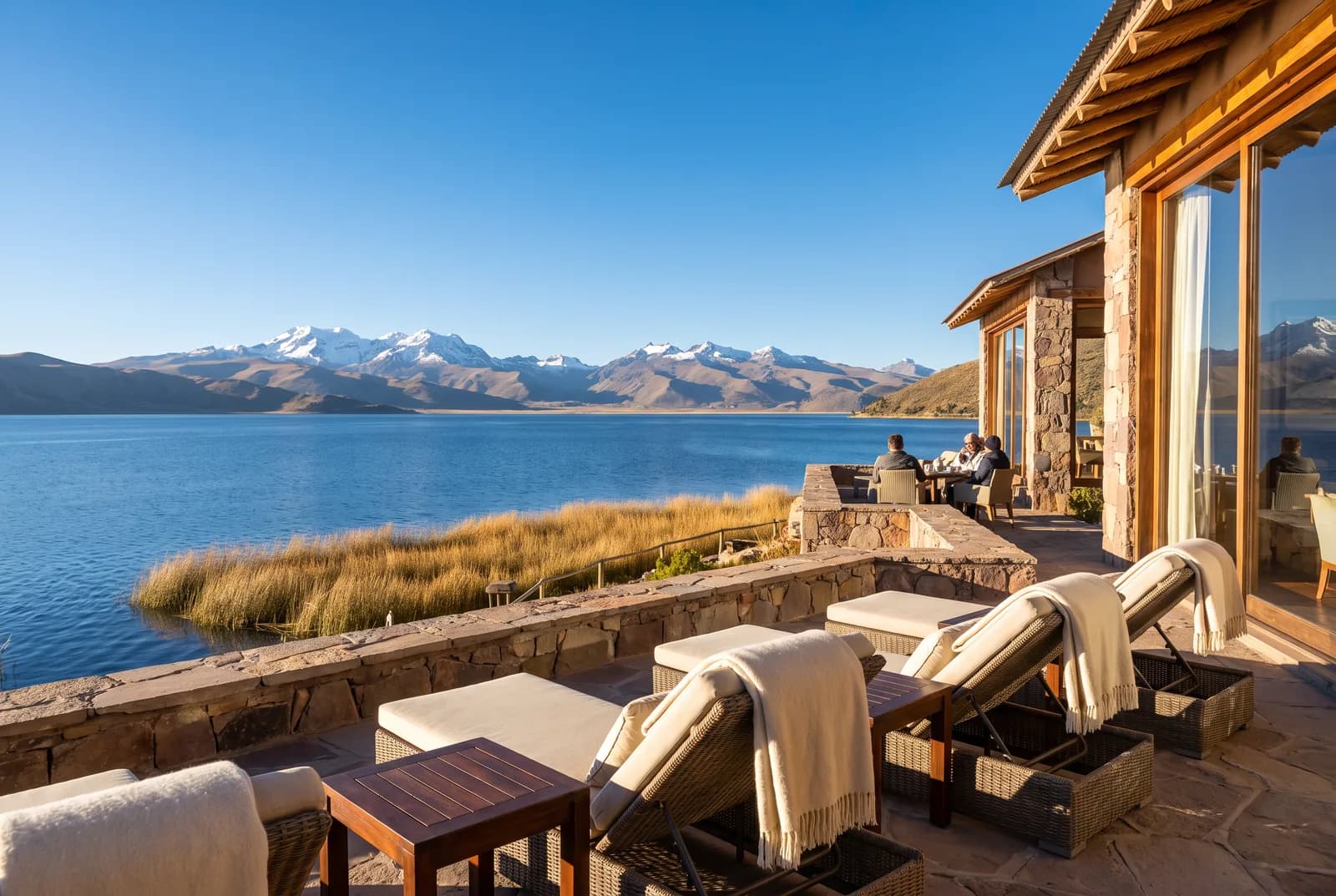
GHL Hotel Lago Titicaca
The only hotel located right on the lake: it occupies Esteves Island, connected to Puno by a bridge, with water all around and the sunrise over Titicaca from the room window. Restaurant with lake view, private pier for the island trip.
The mentioned hotel or a similar one, of the same category. Final confirmation is made upon registration.
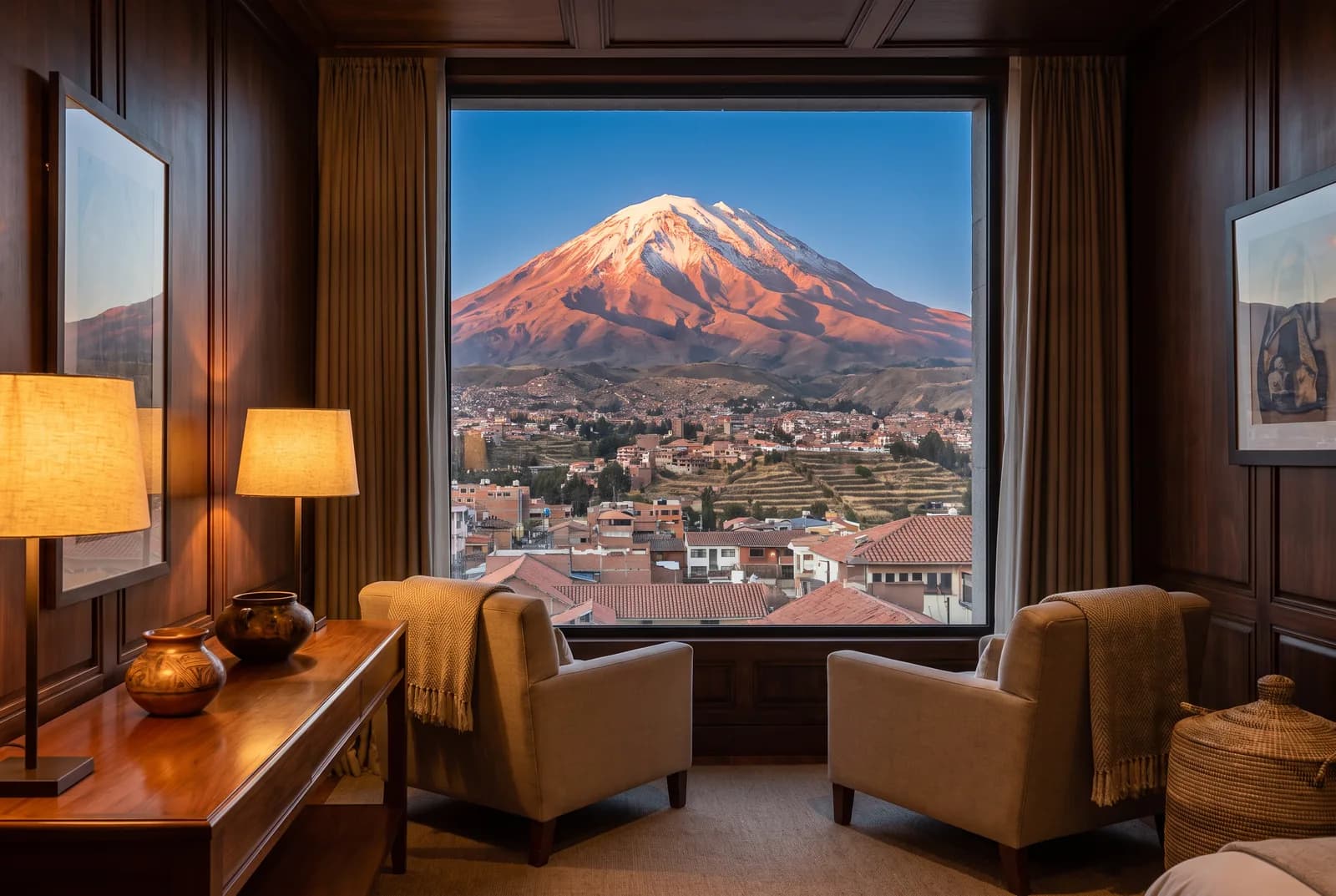
Casa Grande Hotel
Five-star hotel in Calacoto, the quiet neighborhood in the Zona Sur of La Paz, at 3,300 meters — the lowest point of the city, where it is easiest to breathe. Large rooms with views of Illimani, restaurant and spa.
The mentioned hotel or a similar one of the same category. Final confirmation will be made upon registration.
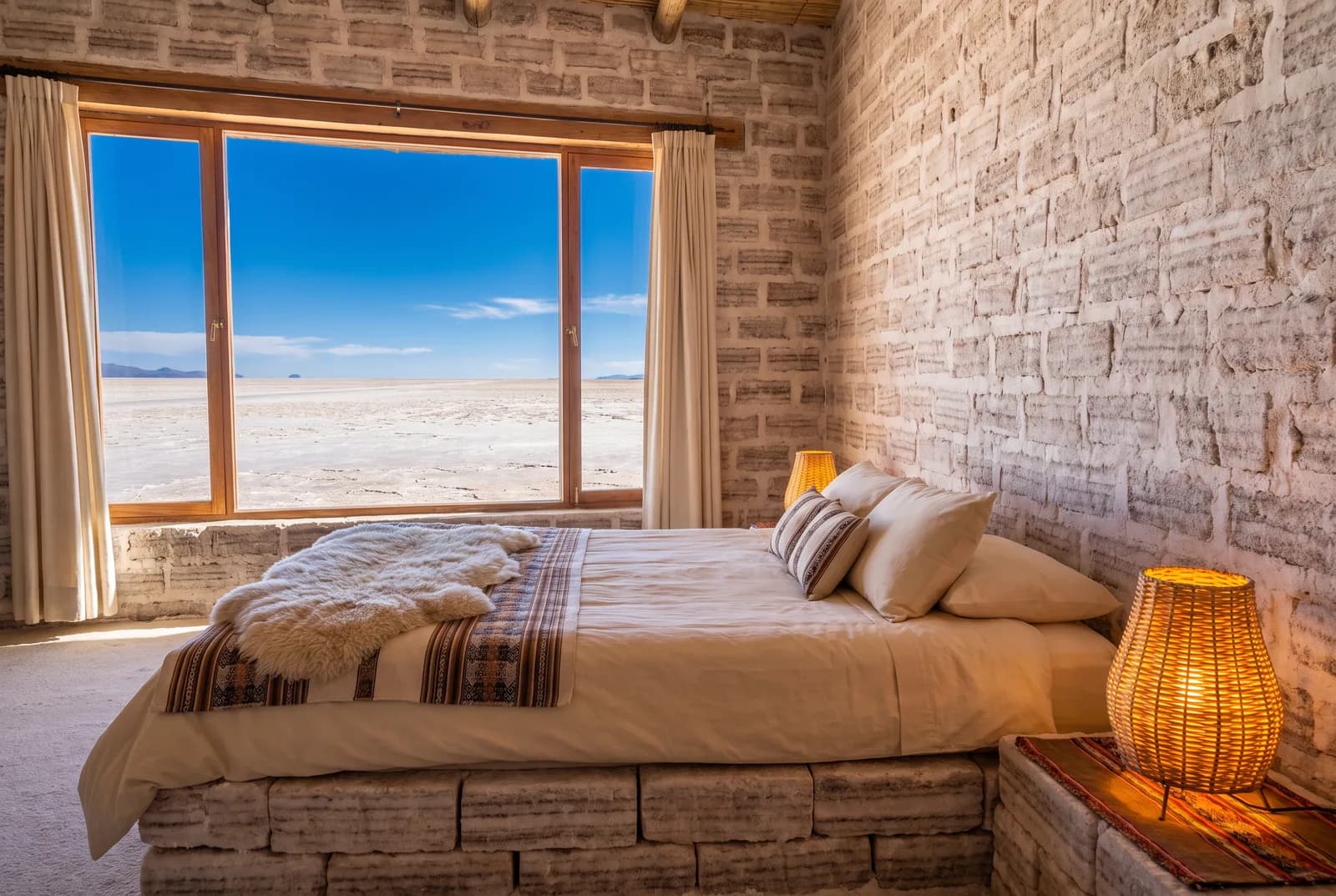
Hotel de Sal Luna Salada
Hotel built from salt blocks — walls, floors, beds, tables — on a hill right at the edge of the salt flat, with white stretching to the horizon from every window. Considered the best salt hotel in the region for comfort: heating, hot water, restaurant with Andean cuisine, and a terrace for stargazing.
The mentioned hotel or a similar one, of the same category. Final confirmation is made upon registration.
Optional Activities
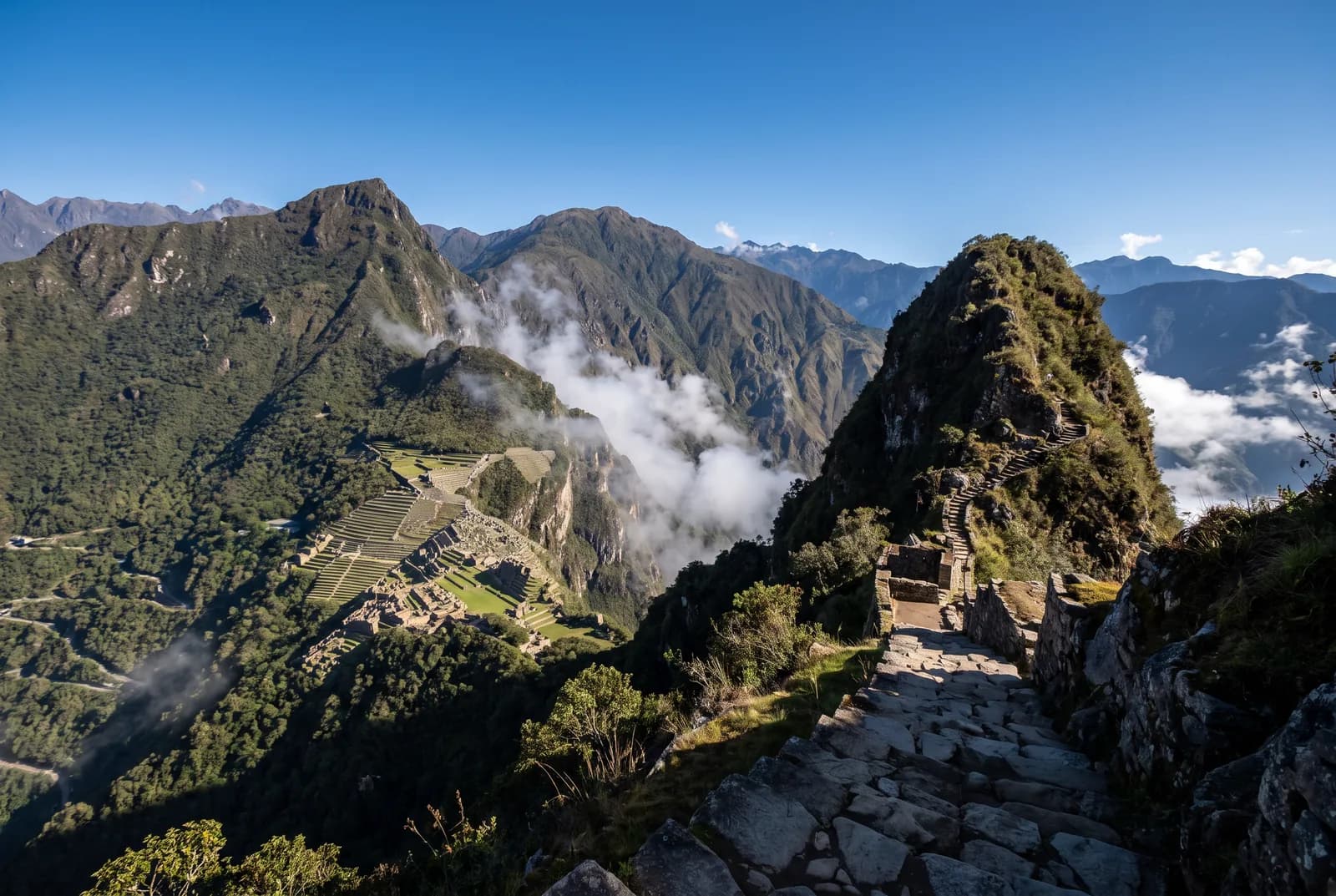
Climbing Huayna Picchu
- Permit with fixed time, reserved in advance
- Approximately two hours round trip
- Steep Inca steps, with cables
- Limited places - confirmed upon registration
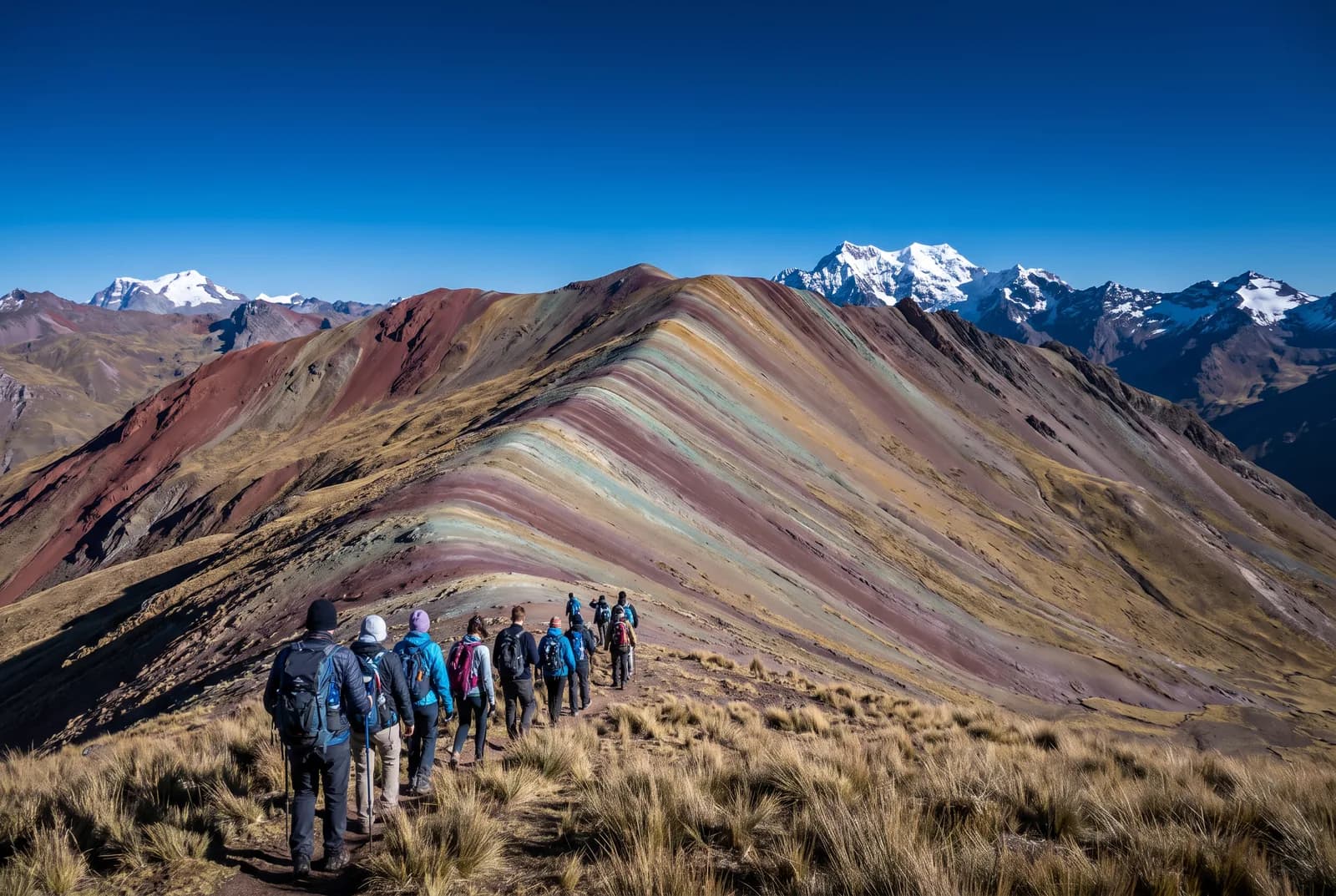
Rainbow Mountain (Vinicunca)
- Departure at 04:00, private transfer
- 3-hour hike round trip, at 5,000 m
- Breakfast and lunch included
- Horse option for ascent
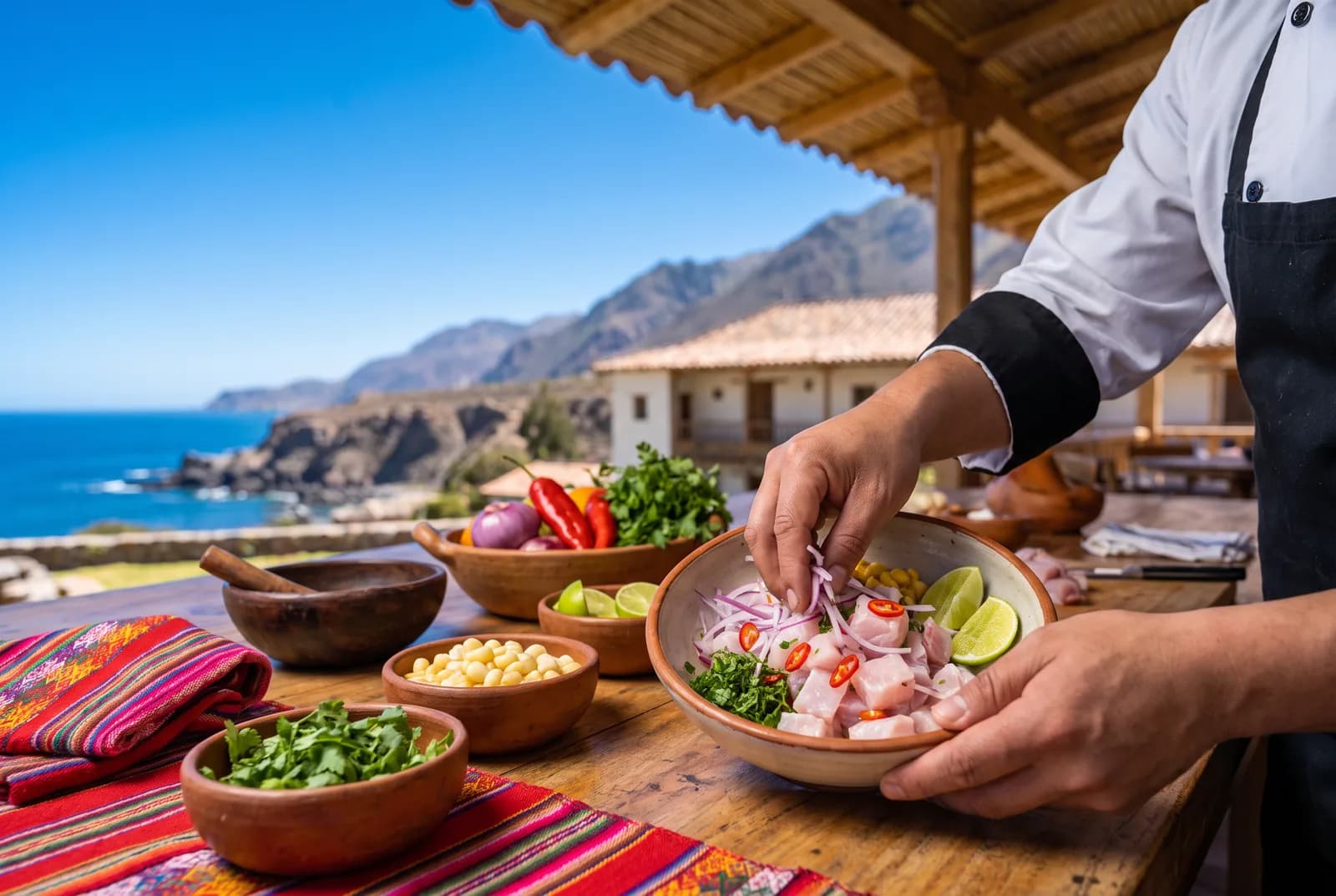
Ceviche course in Lima
- Fish market with a local chef
- Three dishes cooked by you
- Pisco sour included
- Three hours, with lunch

Stars on the Salar
- Night outing with 4x4
- Astronomy guide
- Hot chocolate and blankets
- Night photos taken by the guide
Flights
Flight details included in the package
KLM
KL 1374 + KL 743
OTP
Bucharest
06:15
AMS
Amsterdam
08:35
AMS
Amsterdam
12:55
LIM
Lima
18:30
LATAM
LA 2023
LIM
Lima
06:35
CUZ
Cusco
08:00
Boliviana de Aviación
OB 302
LPB
La Paz
18:40
UYU
Uyuni
19:35
Boliviana de Aviación
OB 303
UYU
Uyuni
08:30
LPB
La Paz
09:25
LATAM / KLM
LA 2114 + KL 744 + KL 1373
LPB
La Paz
14:30
LIM
Lima
15:40
LIM
Lima
19:50
AMS
Amsterdam
15:20
AMS
Amsterdam
17:35
OTP
Bucharest
21:50+1